


- Secure payment
- Spanish and English support
- With you since 2018
WooBase 1.1.0 (VendBase)
$299.00 El precio original era: $299.00.$5.99El precio actual es: $5.99.
Quick summary
WooBase is a pre-configured product database and structure for online stores built with WordPress and WooCommerce. It's designed for those who need to get started quickly, test sales strategies, or build e-commerce prototypes without spending days creating product pages, categories, and variations from scratch. It provides a structured and coherent starting point to accelerate e-commerce projects without improvisation.
What problem does it help solve?
The initial roadblock when setting up an online store in WooCommerce is usually not technical, but operational: category structure, product names, attributes, variations, reference prices, catalog organization, etc. When you start from scratch, everything falls on you, and every decision consumes time, energy, and focus that you could dedicate to validating your business model or acquiring customers.
This happens when you need to quickly set up an e-commerce site for a client, a sales demo, or a realistic testing environment, and you find yourself manually creating test products haphazardly, with generic names like "Product 1" and "Product 2," which don't reflect a credible store scenario. This lack of structure clutters menus, complicates filters, and reduces the clarity of any design, conversion, or performance tests.
If you've ever tried to present a project to a client or conduct a UX audit and found the catalog poorly designed, you know that the entire analysis becomes distorted. Loading times, internal searches, categories, and navigation behave differently than in a real store, and the decisions you make based on that data are often unreliable.
Why this solution makes a difference
WooBase provides a product database designed for real-world use in WooCommerce, not just for filler. In real-world projects, having a structured catalog from the start means you can focus on design, shopping experience, funnels, and A/B testing without wasting days configuring generic items that you'll later have to delete or recreate.
On the other hand, a coherent initial structure reduces organizational errors that are costly to correct later: poorly hierarchical categories, duplicate tags, meaningless attributes, or products that break the template design. With a consistent dataset, you can test how filters, searches, listings, product pages, and shopping carts behave in a scenario closer to real-world use, improving the quality of your decisions.
When you start noticing that each new WooCommerce project forces you to repeat the same tasks of creating dummy products, adjusting taxonomies, and making minor structural changes, WooBase becomes a productivity booster. It establishes a stable starting point to build upon, eliminating the need to improvise each time.
Signs you need this product
- Problem already present on the site: Your test or staging store is full of unrelated products with random names that complicate behavior analysis and design work.
- Friction in WordPress or WooCommerce: Every time you set up a new ecommerce site, you waste hours creating sample products in order to configure menus, widgets, filters, or product templates.
- Loss of control or time: You spend more time generating "filler" data than testing integrations, payment methods, conversion plugins, or design changes.
- Typical growth scenario: You manage multiple stores, work as a WordPress implementer or agency, and need a solid and repeatable foundation to accelerate new WooCommerce projects.
When does it make sense to use it (and when doesn't)
WooBase is valuable when you need a pre-built catalog to work directly on purchase flows, design, and testing. It's especially useful in development, staging, or sales demonstration environments, where you require consistent data to test performance, navigation, filters, and cart behavior with a realistic volume of products and categories.
This also makes sense when you offer online store creation services and want to show your clients a well-organized ecommerce site from day one, without having to wait for them to deliver all their content. In this context, you can gradually replace the WooBase data with the final catalog without starting from a completely blank canvas.
Conversely, if you only manage a small store with a few products and your entire catalog is already well-defined, the need for a pre-configured database decreases. It's also unnecessary if you're only using WooCommerce as a very simple checkout form, without categories, variations, or complex navigation. In those cases, the initial data load is minimal, and adding an extra structure isn't worthwhile.
Who it fits best for
- WordPress implementers and freelancers: Professionals who create WooCommerce stores on a recurring basis and need to reduce the time between the initial setup and conversion or design testing.
- Digital agencies and web studios: teams that develop multiple ecommerce sites per year and seek to standardize a working environment with consistent sample catalogs for demos, presentations, and internal testing.
- Ecommerce and CRO consultants: Specialists who analyze sales funnels and user experience require consistent data to conduct realistic tests on category, product, cart, and checkout pages.
- Trainers and academies: Educational projects that teach WordPress and WooCommerce courses and need a ready-to-use practice store without relying on each student to create their own catalog from scratch.
Practical benefits
- Real operational improvement: You reduce the time between the basic installation of WooCommerce and the moment when you can already test navigation, filters, menus, and templates with an organized catalog.
- User experience: By having consistent products, UX tests better reflect how a real store will behave, allowing friction points to be detected before the final catalog is released.
- Control and organization: parts of a clear structure of categories, attributes and products, which makes it easier to keep the backend organized and apply good practices from the start.
- Time saving: You avoid creating and deleting dozens of test products in each new project, freeing up hours for what really adds value: design, content, marketing, and automation.
- Error reduction: It reduces the likelihood of ill-considered decisions in the catalog architecture, which later require migrations, mass reassignments, or URL restructuring.
How it fits within WordPress
Within the WordPress ecosystem, WooBase acts as an initial database for WooCommerce. It doesn't replace the core configuration or the extensions that add specific functions to the store; its role is to provide a solid starting point for catalog content, upon which you then apply themes, visual page builders, marketing plugins, or external integrations.
In practice, it integrates into your workflow as an early step in preparing the environment: first you define the general WordPress and WooCommerce settings, and then you incorporate the WooBase structure to immediately start working on menus, archive pages, product sheets, checkout tests and purchase simulations without having to improvise data.
Typical use cases
- Real-world use in ecommerce or projects: Creating staging environments to test design changes, new plugins, or payment integrations on a store with a complete catalog but without compromising customer data or real orders.
- Specific case study: An agency needs to show a potential client how their future online store would work. With WooBase, they can quickly set up a demo e-commerce site with organized products, functional navigation, and a testable checkout process.
- Situation where it provides direct value: A CRO consultant wants to measure the impact of different product layouts on the category page. Having a structured catalog allows them to focus on user behavior rather than generating fictitious data from scratch.
Frequently Asked Questions about WooBase
How does WooBase differ from the generic sample data that WooCommerce provides?
WooCommerce's predefined sample data is intended for simple technical demonstrations. WooBase, on the other hand, is geared towards real-world use: it offers a catalog structure designed for navigation testing, UX analysis, and setting up stores that need a well-organized foundation. If you've ever found that the official sample data falls short of simulating a realistic store, you'll notice that WooBase fills that gap from the very first use.
Can I use WooBase only in testing environments or also in projects that go into production?
WooBase is especially useful in development and staging environments, but it also fits well into projects that will eventually go into production as a starting point. In many cases, it's used first to define and validate the catalog architecture, and once the structure is clear, the base products are replaced with the final inventory for the business. This reduces the risk of having to reorganize everything once the store is already well underway.
At what stage of the project is it most efficient to integrate WooBase?
The optimal time to integrate external products is after configuring the essential WordPress and WooCommerce settings, but before delving into design, optimization, or external integrations. Integrating them too late, when you've already created makeshift products, usually means additional cleanup work. By working with a consistent catalog foundation from the outset, you can design templates, define filters, and organize navigation with a vision closer to the final store.
Does WooBase replace a theme or a page builder like Elementor?
No. WooBase doesn't replace themes or visual builders. It focuses on the structural content of your catalog: products, categories, and internal organization. The visual design, page templates, and graphic presentation still depend on your chosen theme or page builder. In fact, WooBase's function is to complement these layers: thanks to a more realistic catalog, you can more accurately evaluate how your templates and designs respond to different types of products.
What if later I want to adapt the structure offered by WooBase to my own catalog?
WooBase was created as a reference framework, not a rigid catalog. The idea is that you use its structure to work, test, and make decisions with organized data, and then adapt it to your specific inventory. You can rename categories, adjust products, remove what you don't need, and add your own items while maintaining the overall, validated logic. This way, you reduce improvisation and maintain a consistent structure throughout your project.
Conclusion
WooBase is designed for those who need a ready-to-use WooCommerce store without having to go through the same process of creating test products, improvised categories, and chaotic catalogs. It helps you make better decisions about design, structure, and the shopping experience because it provides a near-real store environment right from the start.
If you manage multiple e-commerce projects, conduct audits, or frequently set up demos, having a consistent catalog database ceases to be a luxury and becomes a clear operational advantage. In this context, WooBase fits in as the intermediate piece that allows you to go from an "empty site" to a "functional store for testing" in much less time and with greater control.
Your individual purchase includes:
- Lifetime updates.*
- Product ready to use.
- Immediate access to the product.
- Clean and virus-free files.
- GNU GPL V2/V3 License
- Technical support in Spanish and English.
* In the case of memberships, the period during which you will receive updates will depend on the type of membership purchased: monthly, annual, or lifetime.
Get your questions answered here
Here you'll find answers to frequently asked questions about our service: how it works, what it includes, and how to get the most out of it.
On how many websites can I use the products?
You can use any product from our store on any website you want.
Will I get updates?
Absolutely. If you buy an individual product, you'll get lifetime updates for that product.
On the other hand, if you purchase a membership, you will receive updates until your membership expires.
What if I have a problem?
First of all, we want you to know that you can count on us. We will assist you and provide the necessary support, so you can rest assured.
On the other hand, it is important for you to know that, given the time difference between countries, your time and ours may not be the same, so we will be delayed accordingly.
Our opening hours start at 9 AM from Monday to Friday, UTC -3. We are open until around 6 PM.
Do they provide technical support?
Yes, and regarding the time, it is usually on average within 24 to 48 business hours.
However, there are times when we have already provided an answer and solution in less than a day, depending on the case.
Are there download limits?
No. We don't believe in that format, so you can download as many times as you want. No problem. We pay for high-quality professional storage precisely to avoid problems.
Do they provide license keys?
No. Giving out the keys is not a viable option, as we have had experiences where they end up circulating everywhere and we can even lose the associated accounts.
That said, all products are original and, in cases where a license key is required to function, we will take care of pre-activating them for you.
Does my purchase include an invoice?
Yes. After payment, you will be able to access your invoice immediately in the "Purchases" section of your user account.
That is why it is important that you properly complete the information requested at the time of payment.
Is there a warranty?
Yes, of course. If there's a problem we can't resolve, or if there's an external issue that doesn't have a general solution, you'll receive support and, if necessary, a full refund. We have a 14-day refund policy from the date of purchase.
- It should be noted that there is no warranty if the product works well and it simply wasn't what you wanted.
There have been instances where someone buys a product, the product works perfectly, but they don't like it and want a refund, keeping the product. That's not right.
However, everything is evaluable and reasonable. Let's use judgment together.
What are the opening hours?
Our opening hours are:
- Monday to Friday, from 9 a.m. to 6 p.m.
- Saturday and Sunday: No service.
UTC -3 time

Reviewed by the WPClub team
At WPClub, we carefully review each product before listing it. Our team evaluates its key features, compatibility, and performance to provide you with reliable, up-to-date, and helpful information when choosing and using each resource available in our store.
Download previous versions
If you have purchased this product, or have an active membership, you can download previous versions as we release them, without any limits or restrictions.
| Nombre del producto | Versión | Tamaño | Fecha | Descargar |
|---|---|---|---|---|
| No hay versiones anteriores registradas. | ||||

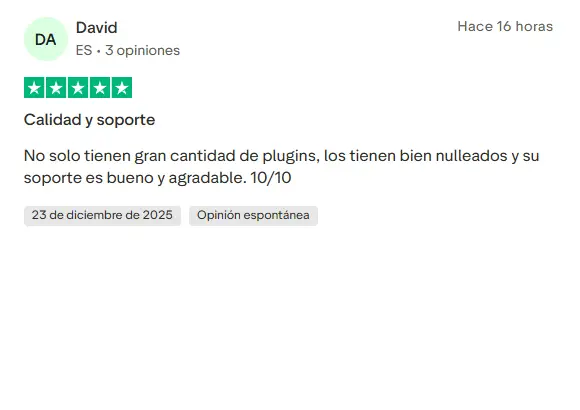
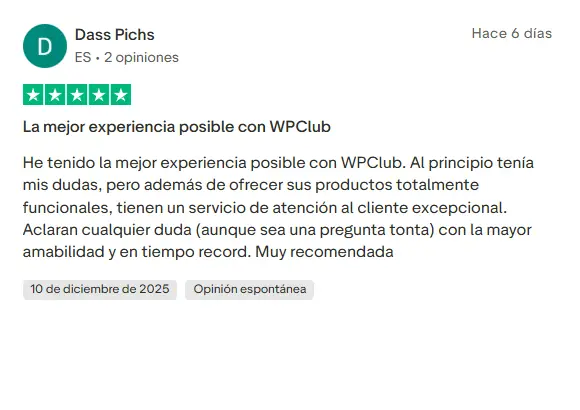
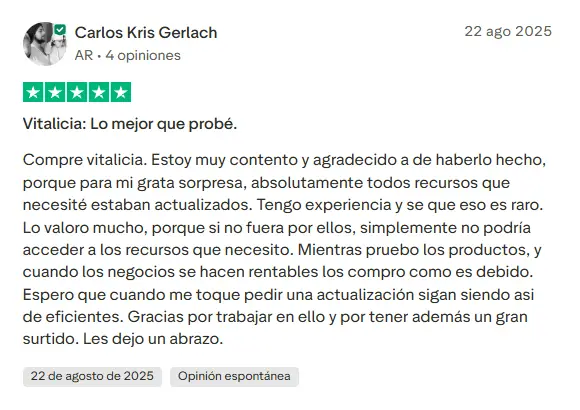
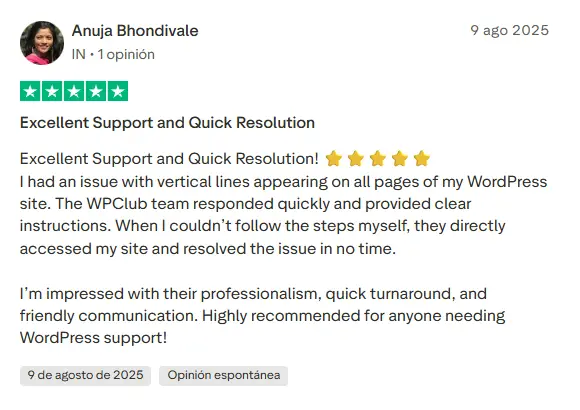
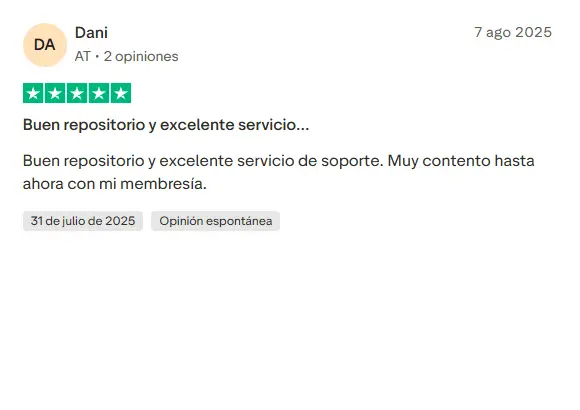
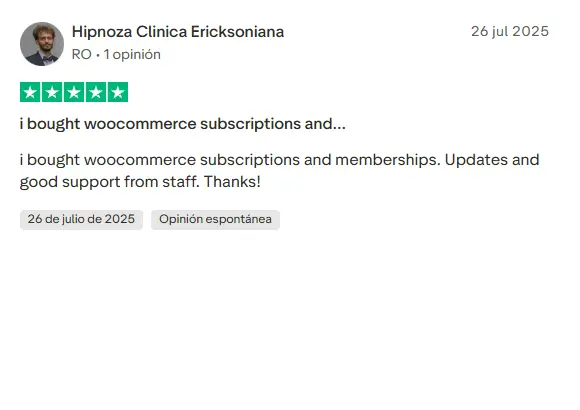
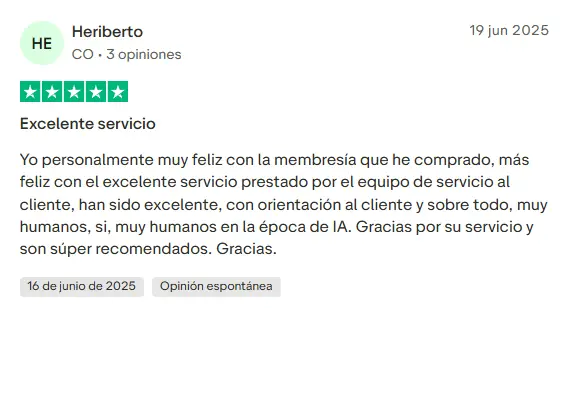
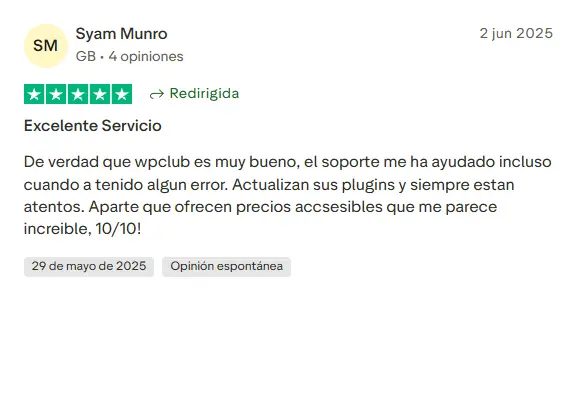
Our Reputation on Trustpilot
Many thanks to those who take the time to give us a rating on Trustpilot. Each and every one of your comments is very helpful to us. We strive to provide a rewarding experience for every member of our community, always with respect and care. We'll be here!













WPClub Memberships
Access our entire catalog for a single payment. We offer three memberships: Monthly, Annual, and Lifetime (One-Time Payment).
- Save thousands of dollars
- Unlimited daily downloads
- No recurring payments
- Fast downloads by AWS
- Quality service and support, validated since 2018
- We work with love for our community