


- Secure payment
- Spanish and English support
- With you since 2018
eMarket Multi Vendor MarketPlace 8.2.3
$59.00 El precio original era: $59.00.$5.99El precio actual es: $5.99.
Quick summary
eMarket Multi Vendor Marketplace is a specialized theme for building an online marketplace with multiple vendors on WooCommerce. It's designed for those who want to transition from a traditional store to a marketplace model, with catalogs separated by store, improved product management, and a clear shopping experience for the customer. It's especially useful for projects that need to scale to a larger number of vendors without sacrificing organization or visual clarity.
What problem does it help solve?
When you convert a WooCommerce store into a multi-vendor environment, chaos quickly ensues: disorganized product listings, unclear seller pages, confusing navigation between stores, and a constant feeling of confusion for the buyer. The result is a platform where it's difficult to understand who sells what, what each store's terms and conditions are, and how to follow a coherent purchase journey. This translates into abandoned carts, unnecessary inquiries, and an unprofessional marketplace image.
In real-world projects, the problem isn't just technical, but also about presentation. If you've ever had a seller complain that "their store doesn't look good" or that customers can't tell which seller they're buying from, the issue is usually not with the WooCommerce settings, but with the site's visual structure. Without a multi-seller design, each new seller you add adds clutter and complexity to the navigation.
eMarket Multi Vendor Marketplace addresses precisely this situation: it visually organizes each seller's store, categories, and product listings so that everything makes sense to the end user. This reduces confusion and makes the marketplace model understandable from the first visit, even for shoppers unfamiliar with this type of platform.
Why this solution makes a difference
This theme is built around the marketplace concept, not the other way around. Instead of adapting a standard store design, the layout already includes seller pages, comparable listings, clear filters, and specific blocks to highlight stores, offers, and featured products from different sellers. This directly impacts daily navigation: users know where they are, who they're interacting with, and what options are available at every step.
In day-to-day management, this translates into less friction: fewer basic customer questions, less confusion about shipping and seller terms, and a more intuitive visual flow for comparing similar products from different stores. When you start noticing that your team is spending more time explaining how the marketplace works than actually improving sales, a specialized design like eMarket Multi Vendor Marketplace becomes a structural change, not just an aesthetic one.
Furthermore, the layout is designed to accommodate growth without sacrificing clarity. You can expand from a few vendors to dozens without the homepage or listings becoming an unmanageable wall of products. This provides visual stability in the medium term and avoids constant redesigns as the project evolves.
Signs you need this product
- Your WooCommerce site already allows you to sell to multiple sellers, but the store is perceived as a simple huge catalog, with no clear differentiation between each store.
- Users frequently ask which seller each product is from, or get confused when mixing products from different sellers in the same cart.
- You find it difficult to keep the category pages organized because they have grown too large, and the current design doesn't help filter or read the information quickly.
- You are in a growth phase where you are adding new sellers every month and you need the front-end to keep up with this increase without redoing the entire site structure.
When does it make sense to use it (and when doesn't)
eMarket Multi Vendor Marketplace makes sense when your project is designed as a marketplace with multiple vendors sharing a platform, but needing to maintain their own visual identity and dedicated spaces within the same WordPress site. It's especially suitable if you already use multi-vendor extensions for WooCommerce and the current design is no longer sufficient to clearly showcase each store, its featured products, and its reputation.
If you've ever found yourself needing to explain things the interface doesn't make clear when reviewing your store with a client, it's time to consider a specialized theme. In this context, eMarket Multi Vendor Marketplace provides a structure designed to help users understand how your marketplace works, where to find each vendor, and exactly what they're buying—all without manuals.
On the other hand, this theme isn't necessary for projects with only one seller or a small store with a very limited catalog. If your goal is simply to sell a few of your own products without separate stores or managing different sellers, a generic WooCommerce design might suffice. In those cases, the visual complexity of a marketplace doesn't add value and can even be excessive.
Who it fits best for
- Entrepreneurs who create niche marketplaces with several specialized sellers (crafts, local products, fashion, technology) and need each store to have a clear presence within the same platform.
- WordPress Agencies and Freelancers who manage multi-vendor projects for clients and are looking for a stable design, with a predefined structure for marketplaces, that reduces layout times and constant visual adjustments.
- Online stores evolving into marketplaces They are moving from selling only their own products to allowing third parties to publish their catalog, without wanting to lose visual consistency or create a site that is difficult for the end buyer to understand.
Practical benefits
- Real operational improvement: Seller pages, categories, and listings are organized so that each store has a recognizable space, reducing confusion and helping to keep the buying flow clear even with many products.
- Buyer's user experience: The visual structure makes it easier to compare options from different sellers, locate offers from a specific store, and understand who you are buying from at any given time, increasing trust in the platform.
- Control and organization: You have templates designed to highlight products, sellers, and collections, allowing you to maintain visual order even as your catalog and number of stores grow rapidly.
- Time saving: By having marketplace-focused layouts, you reduce the hours spent creating store pages, seller sections, and specific structures to display multiple catalogs from scratch.
- Error reduction: A clearer presentation minimizes misunderstandings about who sells what, what policies apply, and how products are grouped, reducing returns motivated by confusion and repetitive inquiries.
How it fits within WordPress
Within the WordPress ecosystem, eMarket Multi Vendor Marketplace acts as the visual and structural foundation of your multi-vendor site. WordPress manages the content, WooCommerce handles the checkout process, and this theme organizes the entire front end that the user sees: homepage, seller pages, product listings, and featured sections. In this context, its purpose is not to add new layers of management, but rather to organize and present coherently what you already have configured in the dashboard.
In the actual workflow, this means you can focus on registering vendors, managing commissions, and adjusting business rules while maintaining a professional and consistent look without having to manually redesign every template. The theme ensures the visual structure reflects your back-end decisions, preventing every operational change from requiring a complete redesign.
Typical use cases
- Marketplace for physical products with independent sellers: For example, a marketplace of local brands where each store has its own page, but all orders are managed under the same umbrella, with listings that combine products from various stores in an orderly fashion.
- Specialized sales platform by category: A site focused on a specific niche (such as fashion, electronics, or crafts) where you need to highlight recommended sellers, themed collections, and featured products from different stores without losing clarity.
- Transforming an existing ecommerce site into a marketplace: When an established WooCommerce store decides to open its platform to third parties and needs the presence of these new sellers to be integrated coherently with the design already geared towards online sales.
Frequently Asked Questions about eMarket Multi Vendor Marketplace
What differentiates eMarket Multi Vendor Marketplace from a standard WooCommerce theme?
The key difference lies in the design approach. A standard theme prioritizes a single store's catalog, while eMarket Multi Vendor Marketplace structures pages with multiple sellers in mind. The templates include dedicated sections for showcasing stores, product blocks for each seller, trust areas, and visual elements that help distinguish which products belong to which seller. This makes the marketplace model easy to understand and navigate from the start.
Is it useful if I already have the multi-vendor section set up in the WordPress dashboard?
Yes, the value of eMarket Multi Vendor Marketplace becomes apparent precisely when the operational aspects are already defined and what's missing is a clear presentation of that system. If your dashboard already manages vendors, commissions, and orders, but the site's front end looks like a generic storefront, this theme allows you to align the visual experience with the business logic you already use. This transforms a functional internal setup into a marketplace that's easy for buyers to understand.
What happens to the user experience when the number of vendors grows?
In growing marketplaces, the main risk is that the site will become an endless list of products with no apparent order. eMarket Multi Vendor Marketplace is prepared for this scenario, with structures that segment by sellers, categories, and thematic blocks. This way, even as the number of sellers increases, users still have clear entry points: featured stores, collections, filters, and sections that guide navigation and reduce the feeling of chaos.
Does it make sense to use this theme if I want to highlight the marketplace brand over the sellers?
Yes, the design allows the marketplace's main brand to take center stage, while sellers are presented as individual stores within that environment. You can structure the homepage to reinforce your brand identity, showcase curated collections, and then direct users to each seller's page when relevant. This is useful in projects where you want to maintain a unified aesthetic while clearly showing who is behind each product.
When is it advisable to migrate from a generic theme to eMarket Multi Vendor Marketplace?
It's worth considering a change when you start noticing that the current structure is falling short: makeshift seller pages, confused customers buying from different stores, or difficulty highlighting specific sellers without breaking the design. It's also a good time when you plan to add several new sellers and want to prevent catalog growth from resulting in a cluttered site. Migrating before the chaos becomes obvious helps maintain a polished image throughout the expansion process.
Conclusion
eMarket Multi Vendor Marketplace is designed for WooCommerce projects that have transitioned to a marketplace model and need that decision reflected in the site's appearance and navigation. Its multi-vendor structure reduces confusion, organizes the product catalog, and helps both buyers and sellers better understand their role within the platform. If your challenge is no longer just selling online, but coordinating multiple stores in a single space, this theme provides a cohesive visual foundation to support that growth.
Your individual purchase includes:
- Lifetime updates.*
- Product ready to use.
- Immediate access to the product.
- Clean and virus-free files.
- GNU GPL V2/V3 License
- Technical support in Spanish and English.
* In the case of memberships, the period during which you will receive updates will depend on the type of membership purchased: monthly, annual, or lifetime.
Get your questions answered here
Here you'll find answers to frequently asked questions about our service: how it works, what it includes, and how to get the most out of it.
On how many websites can I use the products?
You can use any product from our store on any website you want.
Will I get updates?
Absolutely. If you buy an individual product, you'll get lifetime updates for that product.
On the other hand, if you purchase a membership, you will receive updates until your membership expires.
What if I have a problem?
First of all, we want you to know that you can count on us. We will assist you and provide the necessary support, so you can rest assured.
On the other hand, it is important for you to know that, given the time difference between countries, your time and ours may not be the same, so we will be delayed accordingly.
Our opening hours start at 9 AM from Monday to Friday, UTC -3. We are open until around 6 PM.
Do they provide technical support?
Yes, and regarding the time, it is usually on average within 24 to 48 business hours.
However, there are times when we have already provided an answer and solution in less than a day, depending on the case.
Are there download limits?
No. We don't believe in that format, so you can download as many times as you want. No problem. We pay for high-quality professional storage precisely to avoid problems.
Do they provide license keys?
No. Giving out the keys is not a viable option, as we have had experiences where they end up circulating everywhere and we can even lose the associated accounts.
That said, all products are original and, in cases where a license key is required to function, we will take care of pre-activating them for you.
Does my purchase include an invoice?
Yes. After payment, you will be able to access your invoice immediately in the "Purchases" section of your user account.
That is why it is important that you properly complete the information requested at the time of payment.
Is there a warranty?
Yes, of course. If there's a problem we can't resolve, or if there's an external issue that doesn't have a general solution, you'll receive support and, if necessary, a full refund. We have a 14-day refund policy from the date of purchase.
- It should be noted that there is no warranty if the product works well and it simply wasn't what you wanted.
There have been instances where someone buys a product, the product works perfectly, but they don't like it and want a refund, keeping the product. That's not right.
However, everything is evaluable and reasonable. Let's use judgment together.
What are the opening hours?
Our opening hours are:
- Monday to Friday, from 9 a.m. to 6 p.m.
- Saturday and Sunday: No service.
UTC -3 time

Reviewed by the WPClub team
At WPClub, we carefully review each product before listing it. Our team evaluates its key features, compatibility, and performance to provide you with reliable, up-to-date, and helpful information when choosing and using each resource available in our store.
Download previous versions
If you have purchased this product, or have an active membership, you can download previous versions as we release them, without any limits or restrictions.
| Nombre del producto | Versión | Tamaño | Fecha | Descargar |
|---|---|---|---|---|
| No hay versiones anteriores registradas. | ||||

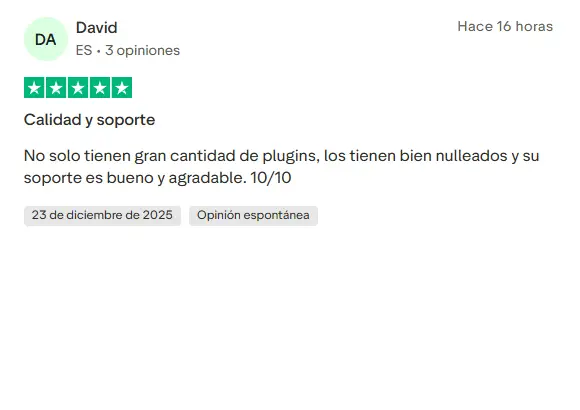
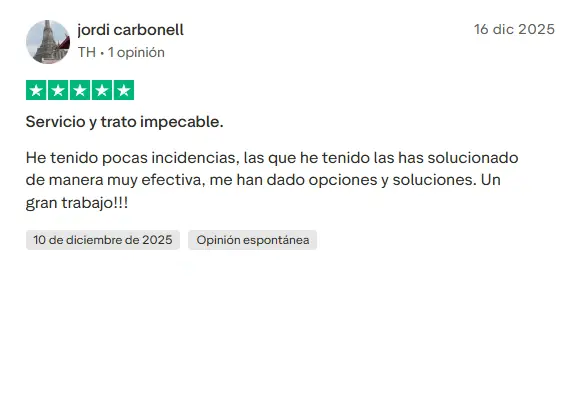
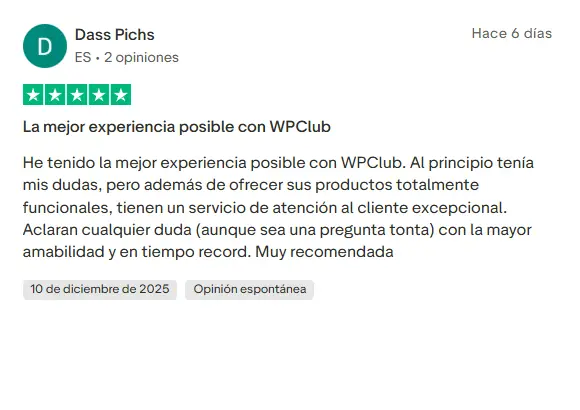
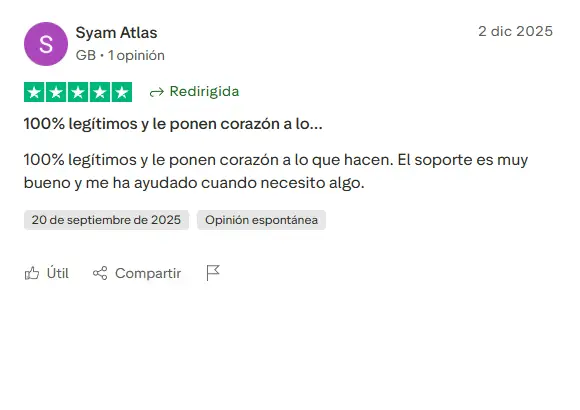
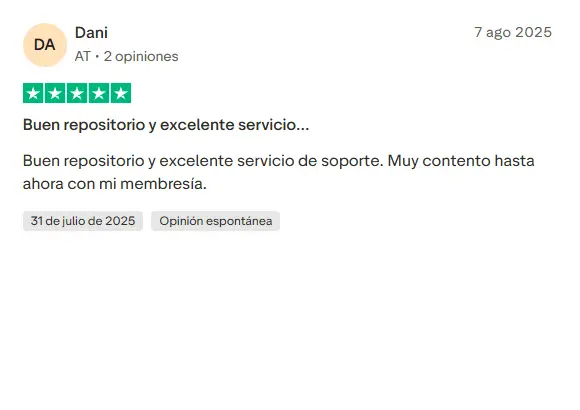
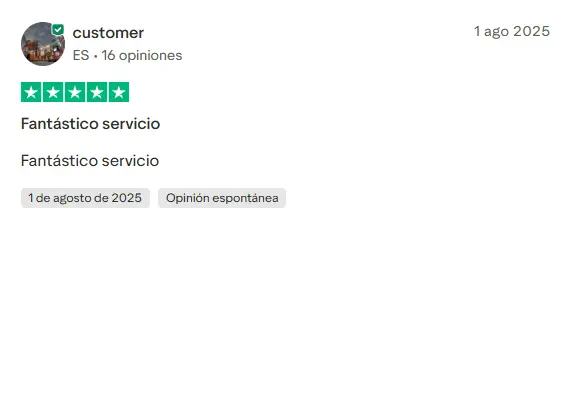
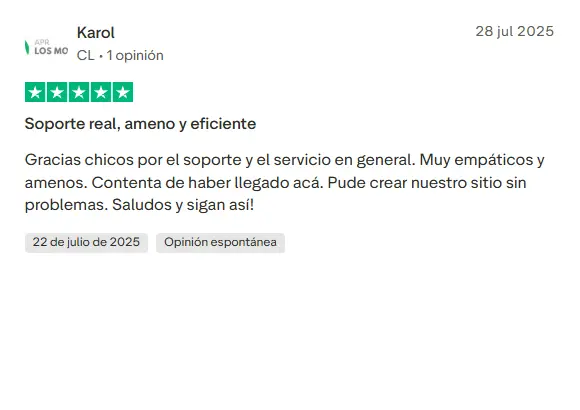
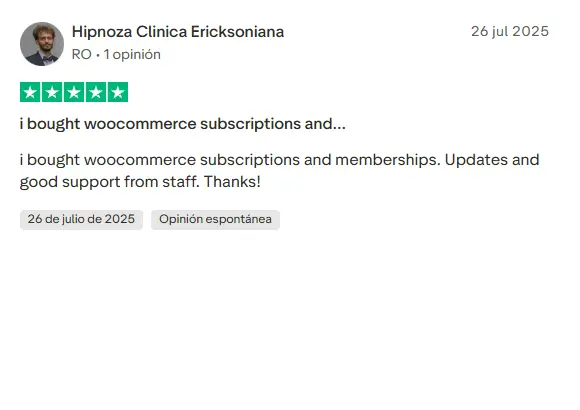
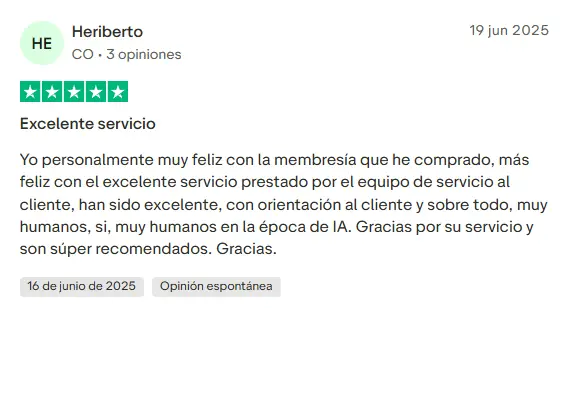
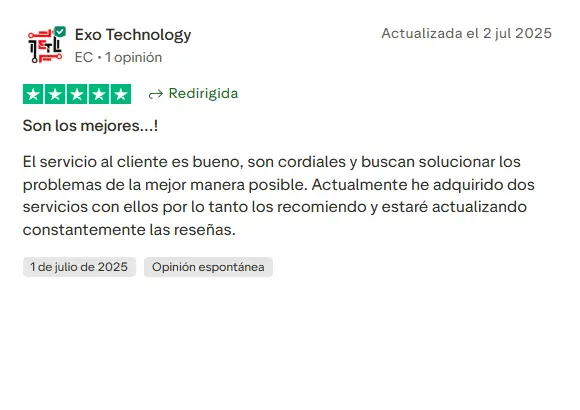
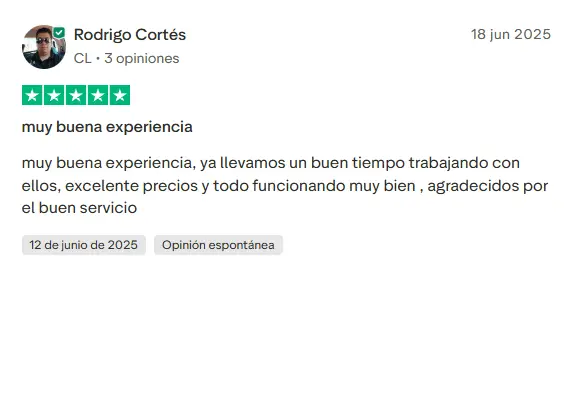
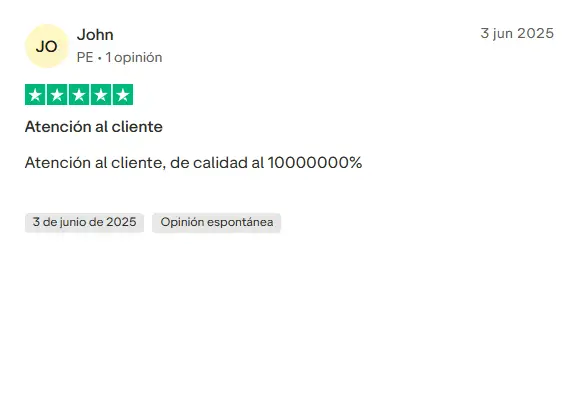
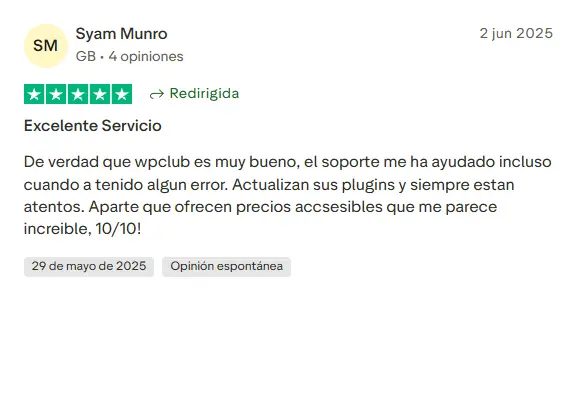
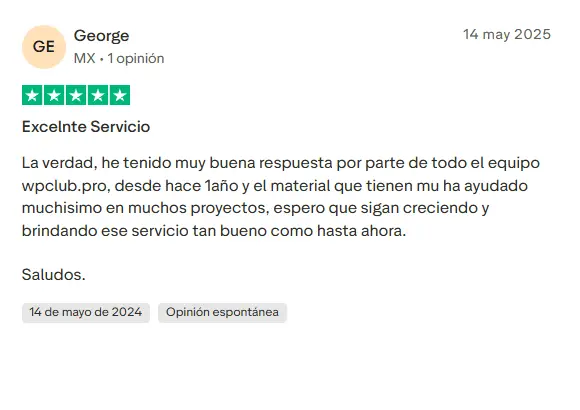
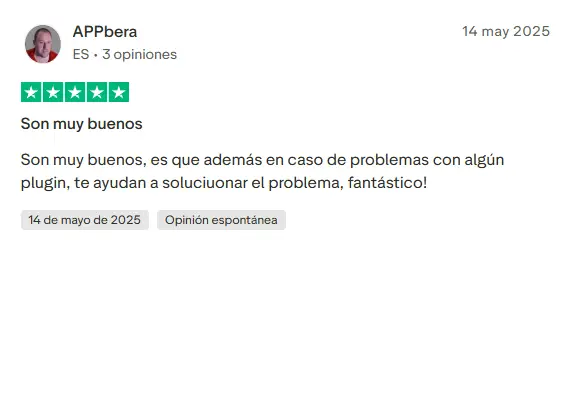
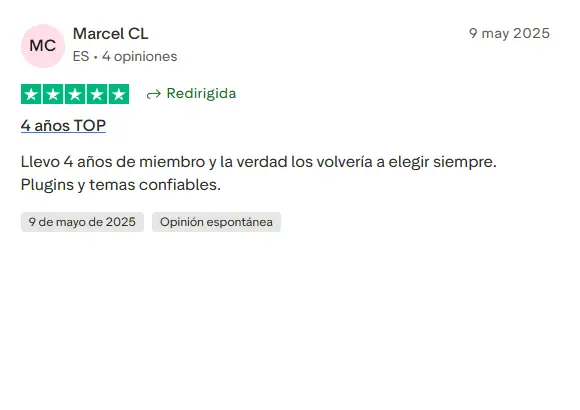
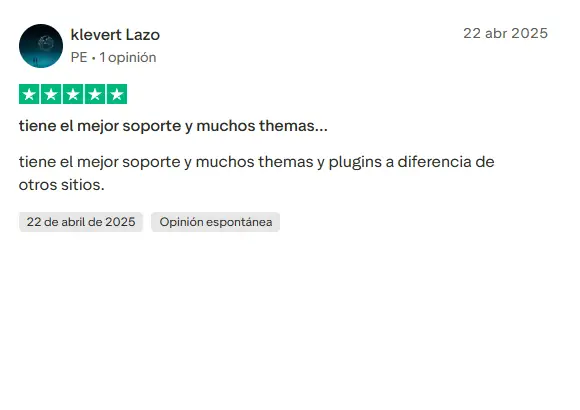
Our Reputation on Trustpilot
Many thanks to those who take the time to give us a rating on Trustpilot. Each and every one of your comments is very helpful to us. We strive to provide a rewarding experience for every member of our community, always with respect and care. We'll be here!

WPClub Memberships
Access our entire catalog for a single payment. We offer three memberships: Monthly, Annual, and Lifetime (One-Time Payment).
- Save thousands of dollars
- Unlimited daily downloads
- No recurring payments
- Fast downloads by AWS
- Quality service and support, validated since 2018
- We work with love for our community