
Custom User Registration Fields 2.2.1



- Secure Payment
- Support from Monday to Friday
- With you since 2018
$49.00 El precio original era: $49.00.$5.99El precio actual es: $5.99.
Quick summary
Custom User Registration Fields lets you add custom, specific fields to the user registration form on your WordPress site. It's designed for projects where you need to capture key information from the start: billing details, access requirements, preferences, professional profiles, or other details that WordPress doesn't collect by default. It's especially useful for sites with recurring registrations: memberships, online academies, intranets, private communities, or e-commerce sites with frequent customer sign-ups.
What problem does it help solve?
In WordPress, the standard signup form only collects the bare essentials: username, email, and password. When your project starts relying on more specific data, this limitation becomes a bottleneck. You need to know who's signing up, what their profile is, what kind of access they require, or what information you need to request to qualify that registration, and you end up improvising with external forms, manual emails, or subsequent requests that disrupt the natural signup flow.
If you've ever experienced new users registering and then spending time chasing them down via email for additional information, you know this leads to delays, errors, and incomplete registrations. In real-world projects, this lack of information from the outset impacts segmentation, content access, and the internal organization of your user base. Custom User Registration Fields addresses precisely this deficiency: it allows you to request only what you need, at the exact moment of registration.
Why this solution makes a difference
The difference lies not only in being able to "add fields," but also in centralizing the information that defines your users within the WordPress signup flow itself. Instead of scattering data across spreadsheets, external forms, or isolated messages, everything is linked to the user's profile from the very beginning. This reduces manual tasks, avoids duplication, and makes it easier for any team member to understand what type of user has just joined the system.
When you start noticing that daily user registration management is becoming confusing, that your team doesn't know why a user has certain access or what information they provided during registration, you need a clear mechanism to structure the data. Custom User Registration Fields brings order and context: each field you create addresses a specific project need and becomes a stable part of your user database, ready to be used for internal processes, segmentation, or quick information review.
Signs you need this product
- Incomplete recordsYou have created users in WordPress, but you don't know important data such as their profile, company, desired access level, or key information about your project.
- High frictionThe registration process involves subsequent manual messages to request more data, which generates waiting, confusion, and communication errors.
- Loss of control over the user baseYou are unable to classify the people who register (students, suppliers, clients, internal members) because they all share the same basic form.
- Growth scenarioYour project goes from a few monthly sign-ups to dozens or hundreds, and that increase makes it clear that the standard WordPress form no longer supports the complexity of your processes.
When does it make sense to use it (and when doesn't)
Custom User Registration Fields make sense when user registration is a strategic part of your site: online academies that require specific student data, clubs or associations that need member information, consultancies that ask for company details, corporate intranets where it is necessary to identify departments, or online stores that want to know more about the customer before giving them access to certain areas.
In this context, having additional fields in the registration form itself ensures that each new user enters the system already organized and aligned with your procedures. This becomes crucial when improvisation stops working and every missing piece of data translates into incidents, extra internal support, or poorly informed decisions.
On the other hand, this product isn't necessary if your WordPress site only allows public registration or if you only need the basic data the system already provides: a personal blog without private areas, a corporate website without memberships or a client area, or projects where user registration is minimal and not part of your business process. In those cases, the standard form is sufficient, and complicating it with more fields would only add unnecessary friction.
Who it fits best for
- Those responsible for online academies or training programs that require collecting information on the student's level, interests, study modality, or data that conditions access to courses and materials.
- Membership and private community managers who need to distinguish between types of members, access areas, onboarding phases, or specific profile information.
- Marketing and sales teams who use WordPress as a gateway for qualified leads and want to capture relevant information in the same registration process, without relying on external forms.
- Corporate projects and intranets where it is key to correctly assign each user according to department, location, internal role or other criteria defined by the organization.
Practical benefits
- Actual operational improvement: It reduces post-registration steps, as all relevant data is captured at a single time, avoiding additional emails or supplementary forms.
- Consistent user experiencePeople complete the necessary information in a guided manner during registration, without jumping to other pages or parallel processes that confuse or slow down the conversion.
- User control and organizationEach additional field better defines the profile of the person entering, making it easier to identify patterns, segment, review applications, or make internal decisions based on clear data.
- Time saving: They reduce repetitive tasks such as requesting missing information, correcting poorly completed profiles, or manually reorganizing users after their registration.
- Error ReductionBy structuring which fields are necessary and in what format, inconsistent data, incomplete profiles, and misinterpretations within the team are reduced.
How it fits within WordPress
Within the WordPress ecosystem, Custom User Registration Fields directly impacts the user creation flow. It doesn't replace the system's built-in account logic, but rather extends it so the registration form reflects your project's actual needs. While still working with WordPress, you continue to manage your users from the usual area, but with additional fields that are now a natural part of the user profile.
In real-world projects, this translates into a richer and more useful user dashboard: instead of just seeing names and emails, you have columns and data that explain who each person is and why they're registered. This way, any review, internal audit, or access decision is based on reliable information stored within the system itself, without relying on external documents or the team's memory.
Typical use cases
- Academy with different types of studentsThe system captures each person's knowledge level, area of interest, and the type of certification they are seeking. This allows you to quickly review who is accessing the site and tailor content access to their specific profile.
- Private community with different rolesBy creating fields such as "member type", "sector" or "objective within the community", you ensure that each new registration arrives already segmented, which simplifies moderation, internal communications and group organization.
- Internal corporate portalYou add fields for department, location, position, or direct supervisor. With this information available from the first login, it's easier to assign permissions, group users, and keep the intranet aligned with the company's actual structure.
Frequently Asked Questions about Custom User Registration Fields
How does Custom User Registration Fields differ from using an external form for registration?
When you use external forms, the data is split between the WordPress user database and the form tool, forcing you to synchronize or manage information in two different places. Custom User Registration Fields works directly with the WordPress signup form, so all the information is saved directly associated with the user. This avoids duplication, simplifies access from the dashboard, and reduces reliance on separate systems for something as basic as user registration.
What types of fields make sense to add with Custom User Registration Fields?
It's helpful to add fields that provide real-world context to your operations: data needed to approve access, segment users, tailor content, or understand the profile of those registering. For example, job title, client type, level of expertise, area of interest, membership number, or information essential for providing the service. The key is that each field has a specific use within your workflow and doesn't become a mere "extra" without a clear function.
Does Custom User Registration Fields completely replace other advanced registration systems?
Custom User Registration Fields focuses on extending the WordPress registration form by adding specific fields that your project needs. It's not intended to replace complex external platforms that manage campaigns, mass automations, or parallel processes outside the user dashboard. Its function is to organize and enrich the data within the WordPress account system itself, so that registration reflects the reality of your business without forcing you to use additional tools for something as basic as creating a new user.
What happens if I change my logging strategy and need other data later?
In ongoing projects, the way you work with users changes over time. With Custom User Registration Fields, you can redefine what information you collect, adjusting the fields to your evolving processes. This allows you to evolve the form without disrupting your user base. It's common to start with a few fields and, as operations grow, incorporate more specific data that's already integrated into each account's profile, avoiding the need to recreate your records from scratch or initiate complex migrations.
Does it make sense to use Custom User Registration Fields if I only want to separate clients from collaborators?
Even in something as simple as distinguishing between clients and collaborators, Custom User Registration Fields brings order from the very first registration. By including a clear user type field, your new users are categorized from the start, and everyone on the team understands which group each account belongs to. If your project grows in the future and you need more nuance (for example, client types, branches, or collaboration levels), the form will already have a foundation in place to reflect those differences without losing consistency.
Conclusion
Custom User Registration Fields exist to solve a very specific problem: when the standard WordPress form no longer reflects the information your project needs to collect at the time of signup. If you've already experienced your team arguing about missing data when reviewing new registrations, or people entering your system "blindly," adding custom fields to the registration process becomes a key element for order and clarity.
This approach ensures that each new user arrives already categorized and contextualized, reducing manual work, errors, and internal confusion. Thus, registration ceases to be a simple technical procedure and becomes a step aligned with how your project actually operates on a daily basis.
Latest update:

Written by: WPClub
With over seven years of experience curating, managing, and distributing GPL products, our content is based on hands-on experience, technical review, testing, and feedback from thousands of users. We aim to democratize and simplify the WordPress world so you can choose with confidence, speed, and ease.
Your Individual Purchase Includes:
- Lifetime updates.*
- Official product, ready to use.
- Immediate access to the product.
- Clean and virus-free files.
- GNU GPL V2/V3 License
- Technical support in Spanish and English.
* In the case of memberships, the period during which you will receive updates will depend on the type of membership purchased: monthly, annual, or lifetime.
Notify Update
We update products Monday through Friday. However, if the product you see is not yet updated, you can notify us so we can prioritize updating it whenever possible.
Get your questions answered here
Here you'll find answers to frequently asked questions about our service: how it works, what it includes, and how to get the most out of it.
On how many websites can I use the products?
You can use any product from our store on any website you want.
Will I get updates?
Absolutely. If you buy an individual product, you'll get lifetime updates for that product.
On the other hand, if you purchase a membership, you will receive updates until your membership expires.
What if I have a problem?
First of all, we want you to know that you can count on us. We will assist you and provide the necessary support, so you can rest assured.
On the other hand, it is important for you to know that, given the time difference between countries, your time and ours may not be the same, so we will be delayed accordingly.
Our opening hours start at 9 AM from Monday to Friday, UTC -3. We are open until around 6 PM.
Do they provide technical support?
Yes, and regarding the time, it is usually on average within 24 to 48 business hours.
However, there are times when we have already provided an answer and solution in less than a day, depending on the case.
Are there download limits?
No. We don't believe in that format, so you can download as many times as you want. No problem. We pay for high-quality professional storage precisely to avoid problems.
Do they provide license keys?
No. Giving out the keys is not a viable option, as we have had experiences where they end up circulating everywhere and we can even lose the associated accounts.
That said, all products are original and, in cases where a license key is required to function, we will take care of pre-activating them for you.
Does my purchase include an invoice?
Yes. After payment, you will be able to access your invoice immediately in the "Purchases" section of your user account.
That is why it is important that you properly complete the information requested at the time of payment.
Is there a warranty?
Yes, of course. If there's a problem we can't resolve, or if there's an external issue that doesn't have a general solution, you'll receive support and, if necessary, a full refund. We have a 14-day refund policy from the date of purchase.
- It should be noted that there is no warranty if the product works well and it simply wasn't what you wanted.
There have been instances where someone buys a product, the product works perfectly, but they don't like it and want a refund, keeping the product. That's not right.
However, everything is evaluable and reasonable. Let's use judgment together.
What are the opening hours?
Our opening hours are:
- Monday to Friday, from 9 a.m. to 6 p.m.
- Saturday and Sunday: No service.
UTC -3 time

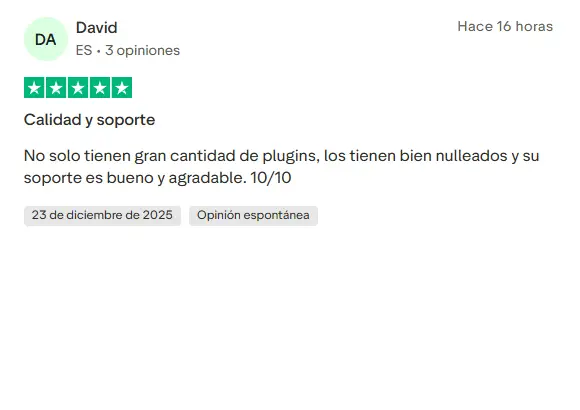
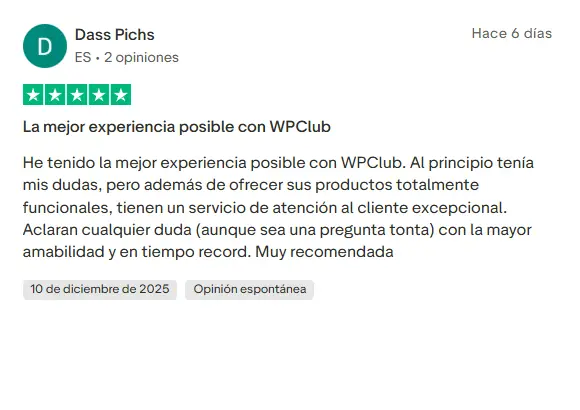
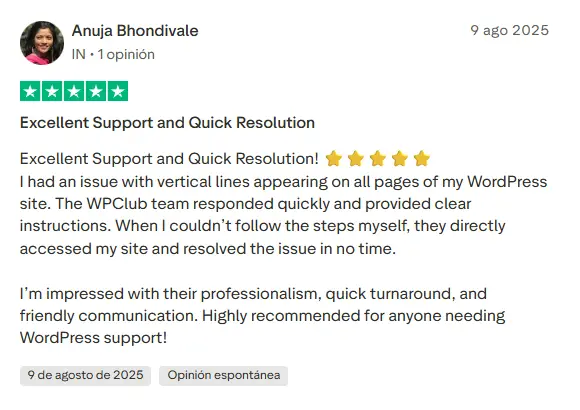
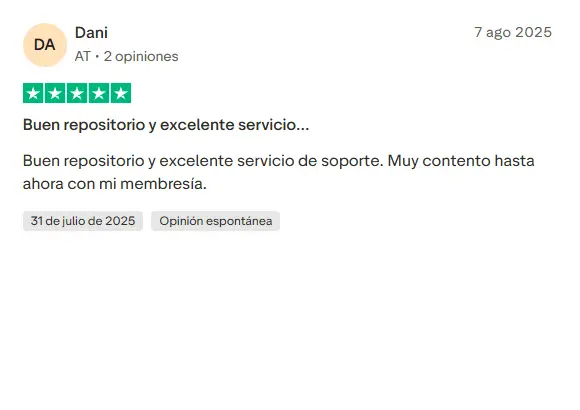
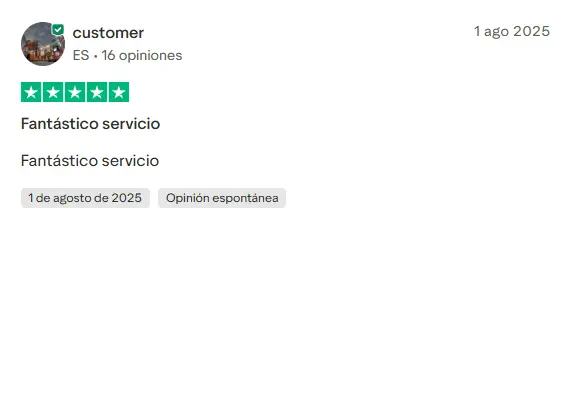
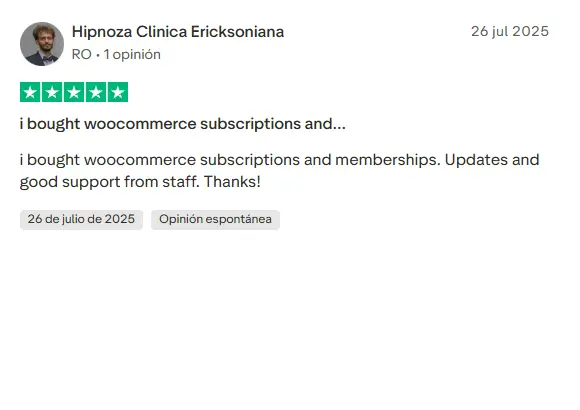
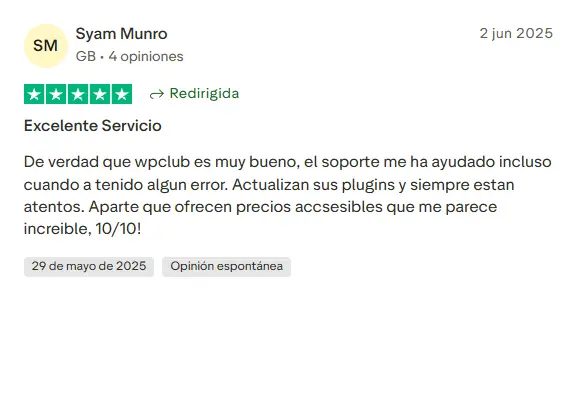
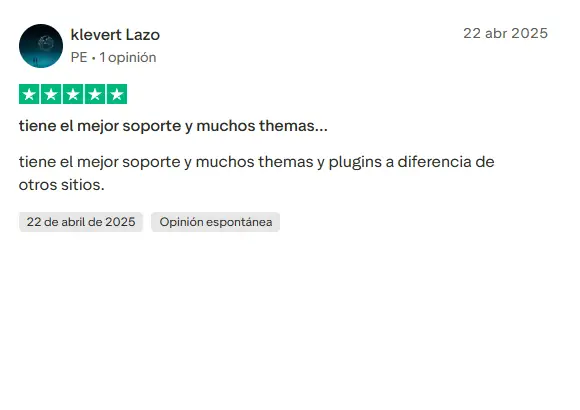
Our Reputation on Trustpilot
Many thanks to those who take the time to give us a rating on Trustpilot. Each and every one of your comments is very helpful to us. We strive to provide a rewarding experience for every member of our community, always with respect and care. We'll be here!














WPClub Memberships
Access our entire catalog for a single payment. We offer three memberships: Monthly, Annual, and Lifetime (One-Time Payment).
- Save thousands of dollars
- Unlimited daily downloads
- No recurring payments
- Fast downloads by AWS
- Quality service and support, validated since 2018
- We work with love for our community