


- Secure payment
- Spanish and English support
- With you since 2018
Marketo Multivendor Theme 5.3.2
$59.00 El precio original era: $59.00.$5.99El precio actual es: $5.99.
Quick summary
Marketo Multivendor Theme is a WordPress theme designed to create multi-vendor marketplaces using WooCommerce. It's ideal for stores looking to transition from selling their own products to managing a shared catalog with multiple vendors and commission structures. If your online store has grown and several vendors have requested to sell under your brand, this theme provides the necessary visual and navigational structure to manage it effectively.
What problem does it help solve?
When a WordPress online store starts incorporating products from multiple sellers, the site becomes confusing. There are no dedicated pages for each seller, no clear way to showcase their reputation, listings are jumbled together illogically, and customers don't understand who is selling them each product. Furthermore, navigation becomes unsustainable: menus are cluttered, categories are duplicated, and product pages lack consistent information about the seller.
This happens when you want your e-commerce site to function like a "shopping mall" marketplace, where multiple businesses sell on the same platform. Without a structure designed for this, you end up patching the design with generic e-commerce templates that don't include vendor dashboards, individual store areas, or clear ways to differentiate catalogs. The result: a loss of customer trust and more manual work organizing products and orders.
Why this solution makes a difference
Marketo Multivendor Theme stands out because it was built from the ground up for a multivendor environment. It's not just about "seeing" the products clearly, but about organizing information by vendor, category, and product type so users can easily identify who is selling what, and under what conditions. In real-world projects, this reduces confusion during the buying process and eliminates the need to respond to repetitive emails about shipping, policies, or product origin.
In day-to-day operations, this theme ensures a clear marketplace structure: clean pages for each store within the platform, filterable listings, a visual layout designed for high product volumes, and sections focused on highlighting top sellers. When you start noticing that your WooCommerce store is becoming slow to manage simply because the design isn't keeping pace with growth, a multi-vendor theme like this one makes all the difference in terms of organization, user-friendliness, and conversions.
Signs you need this product
- You're already managing products from multiple vendors from a single WooCommerce store, but the site doesn't clearly show who sells each item.
- There is friction in navigation: users get lost between categories, do not distinguish internal stores and abandon the cart due to lack of trust in the seller.
- You notice a loss of control when organizing catalogs, since your current theme was designed for a single brand and not for multiple stores.
- Your project is evolving from a simple store to a marketplace, and you need a structure that supports more sellers, reviews per store, and a professional presentation for each one.
When does it make sense to use it (and when doesn't)
The Marketo Multivendor Theme offers clear value when your goal is to build a marketplace on WooCommerce, with multiple sellers publishing and managing their own products. If you've already experienced your current theme falling short in displaying seller pages, differentiating catalogs, and filtering by internal stores, this multivendor-oriented design allows you to reorganize the platform without having to rebuild the entire project from scratch.
It's not necessary if your site only sells products from a single brand and you don't intend to incorporate third-party sellers. In that case, a standard shop theme focused on a single catalog is sufficient. It's also not intended for corporate websites without e-commerce or for content blogs where the primary focus isn't sales or managing multiple vendors.
Who it fits best for
- Marketplace owners who want to centralize the sale of products from various businesses under a single platform and make the buyer's experience easier.
- Agencies and freelancers who develop online marketing projects for clients who need a store with external sellers, commissions, and differentiated catalogs.
- Entrepreneurs who plan to launch "vertical marketplace" projects (for example, only fashion, handcrafted products or electronics) and require a design focused on listing individual stores within the same website.
Practical benefits
- Real operational improvement: the design is already prepared to display internal stores, featured sellers, grouped product sections, and seller pages that organize your catalog without inventing layouts from scratch.
- User experience: Customers navigate a consistent environment where they can quickly identify each seller, view more products from the same store, and make decisions with less friction.
- Control and organization: the marketplace is structured around sellers, categories, and clear listings, which helps maintain order as the number of products grows.
- Time saving: instead of creating custom templates for each section, you reuse theme designs already intended for multi-vendor environments, reducing testing and visual adjustments.
- Error reduction: a marketplace-oriented architecture reduces typical errors such as displaying products without reference to the seller, disorganized menus, or duplicate sections that confuse buyers and administrators.
How it fits within WordPress
Within WordPress, the Marketo Multivendor Theme acts as the visual and structural foundation of your marketplace. WordPress handles content management, WooCommerce manages the cart, orders, and catalog, and the theme is responsible for how sellers, products, and store listings are presented in the public-facing interface. In this context, your workflow focuses on setting up sellers and products, while the design is already in place to display them in a clear and consistent manner.
In the admin panel, you'll continue managing products, categories, and pages just like in any WooCommerce project, but the visual layout follows a marketplace model. The result is a more linear experience: every content decision has a defined place in the theme's structure, preventing improvisation on shop pages or product listings for different sellers.
Typical use cases
- Marketplace for physical products with multiple sellers working under an umbrella brand, like an online shopping mall with stores by sections and listings that can be filtered by seller.
- A specific project where an entrepreneur creates a platform for local artisans, each with their own seller page, individual catalog, and reviews associated with their store.
- This is a situation where an established online store decides to allow third-party suppliers to publish their own products, and needs to reorganize the design to clearly show which items are from third parties and how to access their complete catalogs.
Frequently Asked Questions about the Marketo Multivendor Theme
How does the Marketo Multivendor Theme differ from a traditional WooCommerce theme?
A traditional WooCommerce theme is designed for a single brand selling its own catalog, while the Marketo Multivendor Theme is designed around the marketplace concept. This means the visual structure prioritizes seller pages, sections for multiple stores, listings by vendor, and navigation paths that allow users to discover products by seller, not just by category. In real-world projects, this difference eliminates the need to build custom layouts for each internal store.
What type of marketplace is best suited to the Marketo Multivendor Theme?
The Marketo Multivendor Theme is a particularly good fit for marketplaces where multiple businesses or professionals sell under the same domain and need their own presence on the site. For example, marketplaces specializing in a specific theme (such as fashion, technology, or handmade goods) where each seller requires a clear page, their catalog, and associated reviews. The theme supports structures with many products and sellers, maintaining organized navigation even as the project grows in size.
Can I use Marketo Multivendor Theme if I currently only have one vendor but plan to grow?
If your current store only has its own catalog, but you plan to add third-party sellers in the medium term, the Marketo Multivendor Theme allows you to prepare the structure from the start. You can begin with a presentation similar to a traditional store, and when it's time to add new sellers, you'll already have a design ready for seller pages, store listings, and marketplace sections without having to redo the site. This is useful when your growth plan clearly includes a multivendor model.
What impact does using a specific multivendor theme have on buyer confidence?
In marketplaces, trust rests on three pillars: clarity about who is selling, store presentation, and consistent design throughout the entire buying journey. The Marketo Multivendor Theme reinforces these points by prominently displaying sellers, offering dedicated pages for each store, and maintaining a consistent layout across product listings from different vendors. This reduces concerns about product origin, shipping, or responsibility, and helps customers feel like they are on a professional and well-managed platform.
When is it not recommended to use Marketo Multivendor Theme in a WordPress project?
It's not recommended when your site doesn't have a marketplace component or any intention of incorporating multiple sellers. If your project is a blog, a corporate website, or a small shop where you'll only sell products from a single brand with no plans to expand to third parties, a multi-vendor structure may be unnecessary. In those cases, a simpler theme focused on a single catalog offers a more straightforward setup that's better suited to the project's actual scope.
Conclusion
Marketo Multivendor Theme exists to solve a specific problem: transforming a traditional WooCommerce site into an organized, clear, and scalable marketplace where multiple sellers coexist on the same platform without creating visual or operational chaos. If your project already shows signs of disorganization when working with multiple vendors, a theme designed from the ground up for multivendor environments will help you streamline the structure, improve the buyer experience, and prepare the site for the real growth of both the catalog and the participating businesses.
Your individual purchase includes:
- Lifetime updates.*
- Product ready to use.
- Immediate access to the product.
- Clean and virus-free files.
- GNU GPL V2/V3 License
- Technical support in Spanish and English.
* In the case of memberships, the period during which you will receive updates will depend on the type of membership purchased: monthly, annual, or lifetime.
Get your questions answered here
Here you'll find answers to frequently asked questions about our service: how it works, what it includes, and how to get the most out of it.
On how many websites can I use the products?
You can use any product from our store on any website you want.
Will I get updates?
Absolutely. If you buy an individual product, you'll get lifetime updates for that product.
On the other hand, if you purchase a membership, you will receive updates until your membership expires.
What if I have a problem?
First of all, we want you to know that you can count on us. We will assist you and provide the necessary support, so you can rest assured.
On the other hand, it is important for you to know that, given the time difference between countries, your time and ours may not be the same, so we will be delayed accordingly.
Our opening hours start at 9 AM from Monday to Friday, UTC -3. We are open until around 6 PM.
Do they provide technical support?
Yes, and regarding the time, it is usually on average within 24 to 48 business hours.
However, there are times when we have already provided an answer and solution in less than a day, depending on the case.
Are there download limits?
No. We don't believe in that format, so you can download as many times as you want. No problem. We pay for high-quality professional storage precisely to avoid problems.
Do they provide license keys?
No. Giving out the keys is not a viable option, as we have had experiences where they end up circulating everywhere and we can even lose the associated accounts.
That said, all products are original and, in cases where a license key is required to function, we will take care of pre-activating them for you.
Does my purchase include an invoice?
Yes. After payment, you will be able to access your invoice immediately in the "Purchases" section of your user account.
That is why it is important that you properly complete the information requested at the time of payment.
Is there a warranty?
Yes, of course. If there's a problem we can't resolve, or if there's an external issue that doesn't have a general solution, you'll receive support and, if necessary, a full refund. We have a 14-day refund policy from the date of purchase.
- It should be noted that there is no warranty if the product works well and it simply wasn't what you wanted.
There have been instances where someone buys a product, the product works perfectly, but they don't like it and want a refund, keeping the product. That's not right.
However, everything is evaluable and reasonable. Let's use judgment together.
What are the opening hours?
Our opening hours are:
- Monday to Friday, from 9 a.m. to 6 p.m.
- Saturday and Sunday: No service.
UTC -3 time

Reviewed by the WPClub team
At WPClub, we carefully review each product before listing it. Our team evaluates its key features, compatibility, and performance to provide you with reliable, up-to-date, and helpful information when choosing and using each resource available in our store.
Download previous versions
If you have purchased this product, or have an active membership, you can download previous versions as we release them, without any limits or restrictions.
| Nombre del producto | Versión | Tamaño | Fecha | Descargar |
|---|---|---|---|---|
| No hay versiones anteriores registradas. | ||||

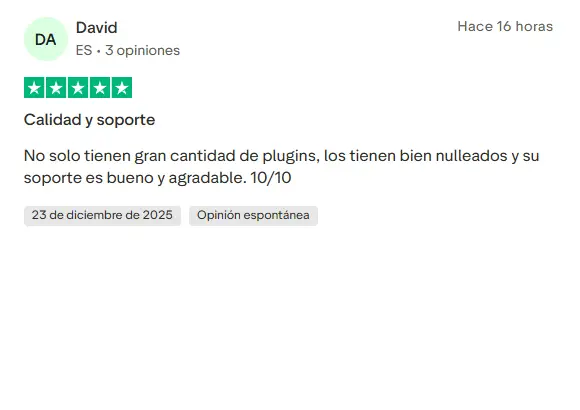
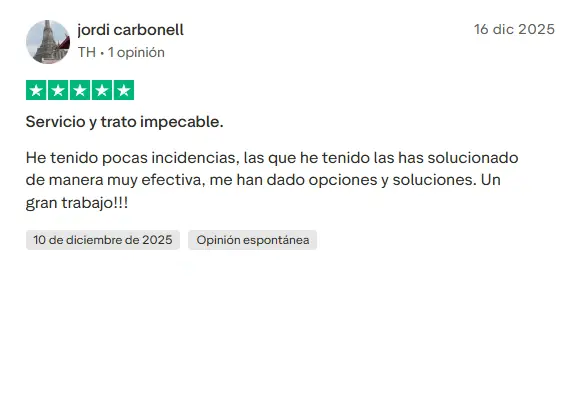
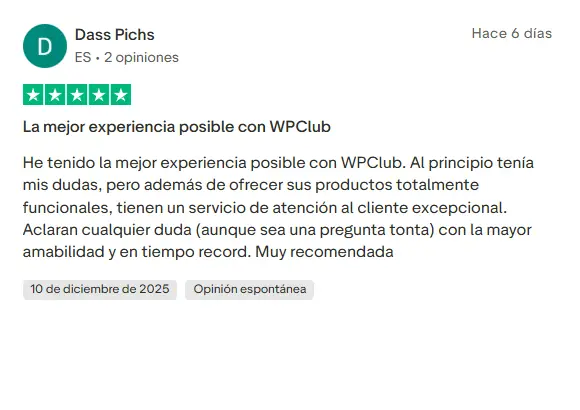
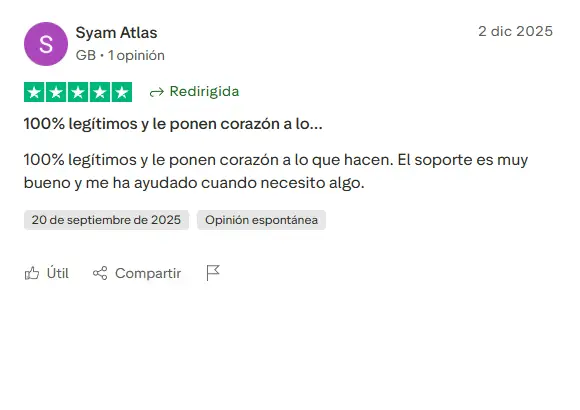
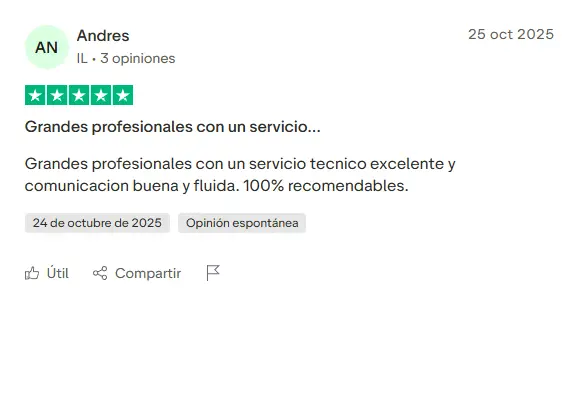
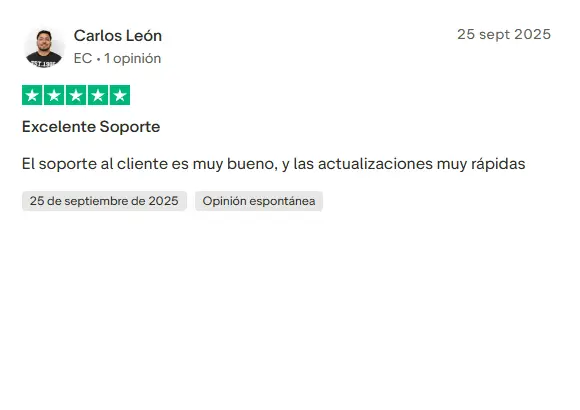
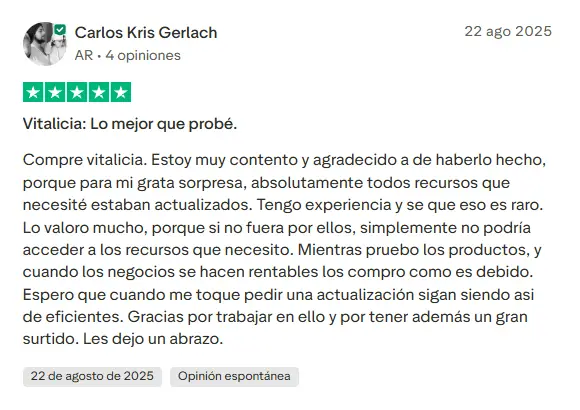
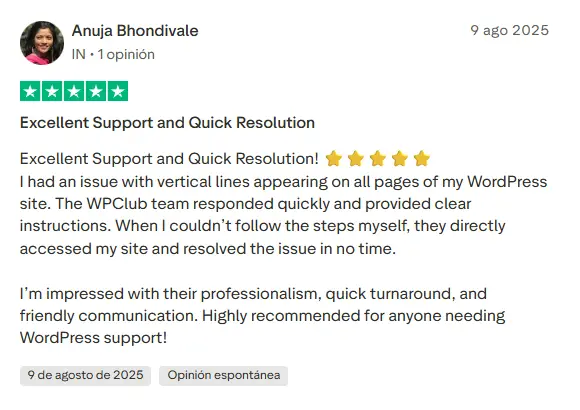
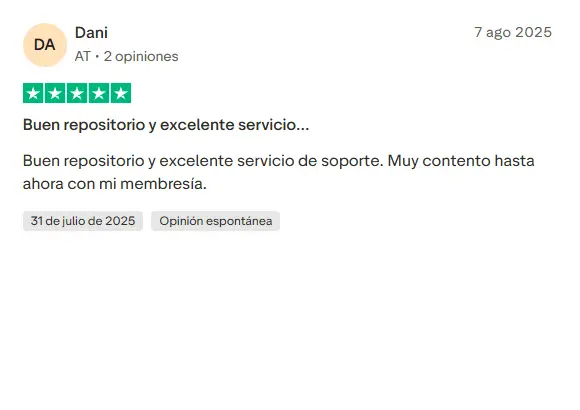
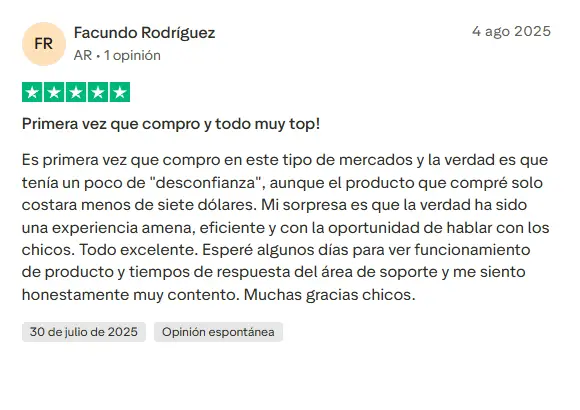
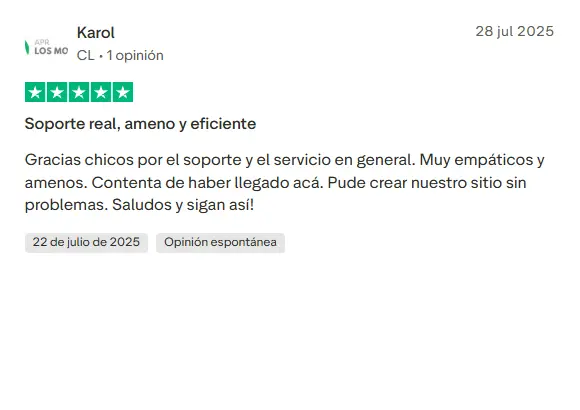
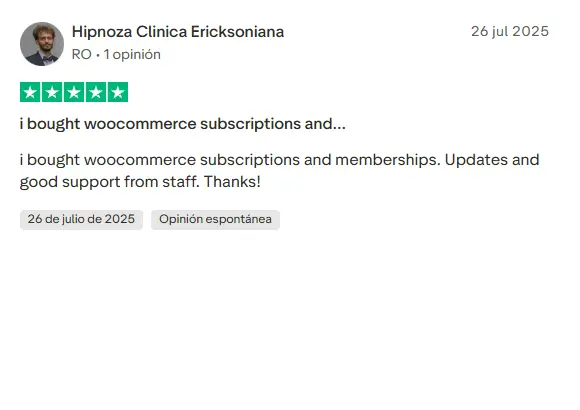
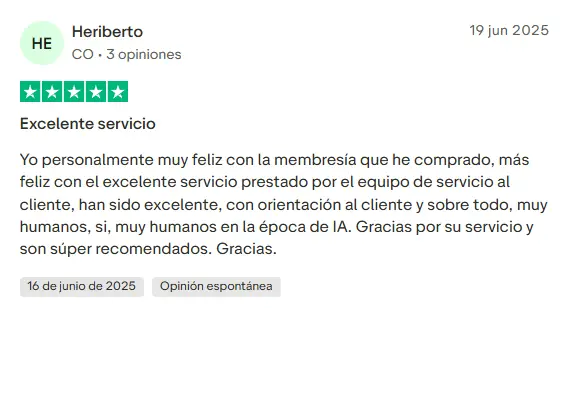
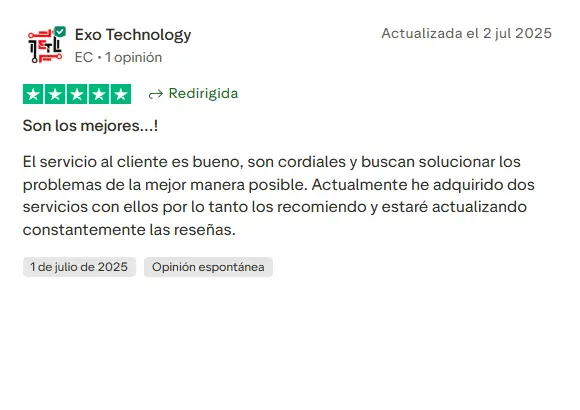
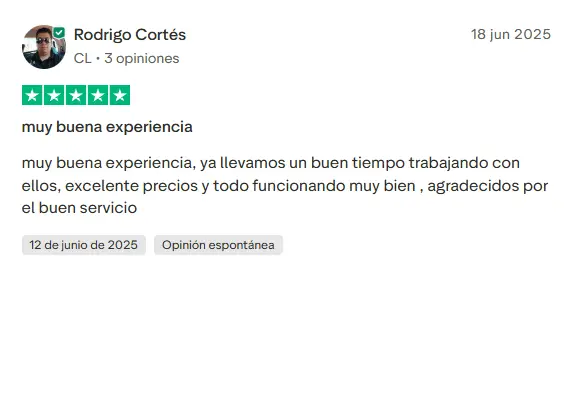
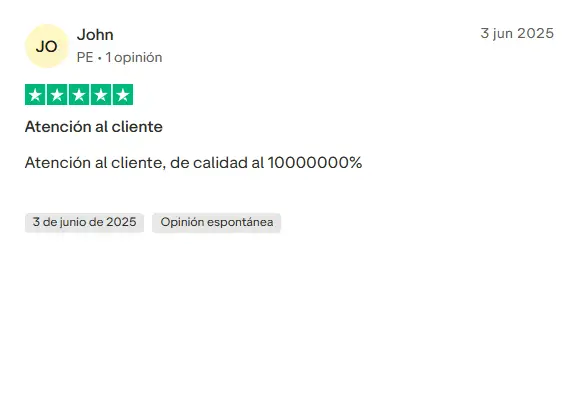
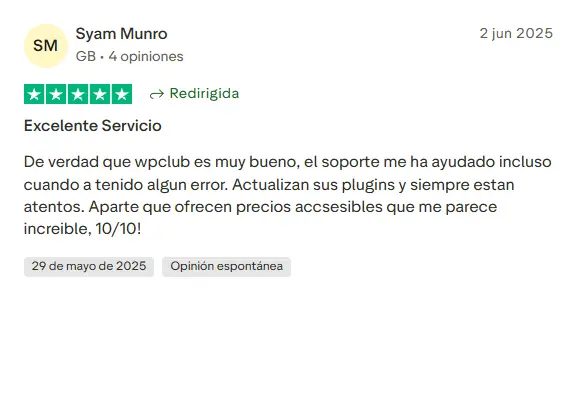
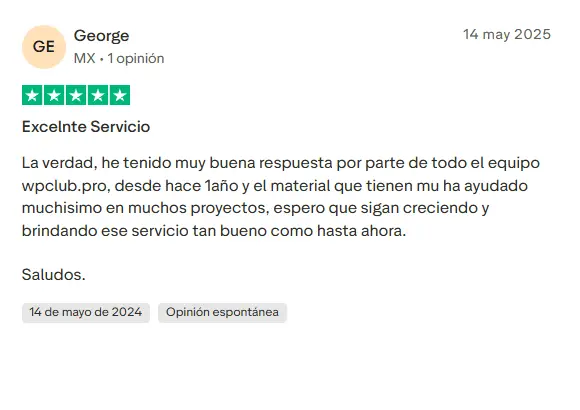
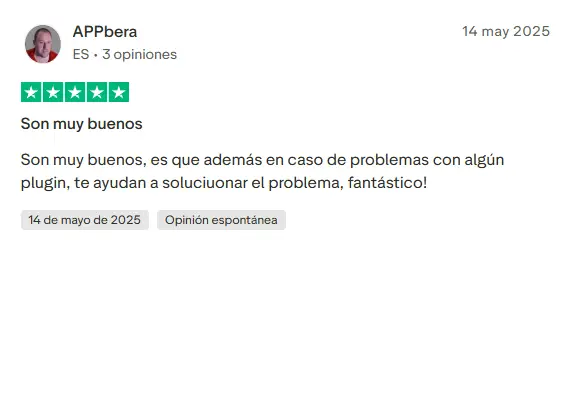
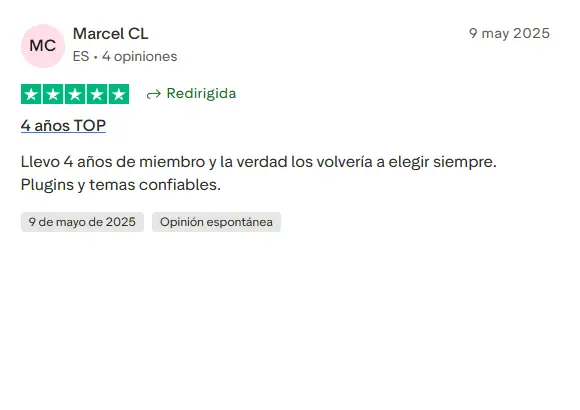
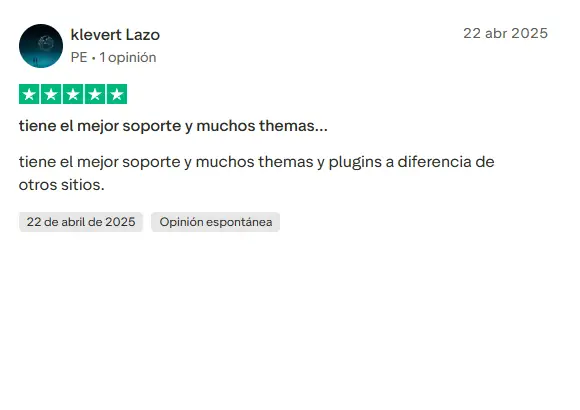
Our Reputation on Trustpilot
Many thanks to those who take the time to give us a rating on Trustpilot. Each and every one of your comments is very helpful to us. We strive to provide a rewarding experience for every member of our community, always with respect and care. We'll be here!
WPClub Memberships
Access our entire catalog for a single payment. We offer three memberships: Monthly, Annual, and Lifetime (One-Time Payment).
- Save thousands of dollars
- Unlimited daily downloads
- No recurring payments
- Fast downloads by AWS
- Quality service and support, validated since 2018
- We work with love for our community