
Perfmatters WordPress Plugin 2.6.5



- Secure Payment
- Support from Monday to Friday
- With you since 2018
$59.00 El precio original era: $59.00.$5.99El precio actual es: $5.99.
Quick summary
Perfmatters is a WordPress performance optimization plugin designed for those who find their site increasingly slow and difficult to debug. It allows you to disable unnecessary loads, fine-tune scripts and styles, and reduce requests without touching any code. It's geared towards sites with multiple plugins, heavy themes, or dynamic content, where every millisecond impacts SEO, conversion rates, and the daily user experience.
What problem does it help solve?
The problem arises when the WordPress dashboard is cluttered with extensions, visual builders, forms, sliders, and widgets that add JavaScript and CSS files to every page, even if they aren't used there. Each view ends up loading more resources than necessary, response times increase, and pinpointing what's slowing down the site becomes confusing and time-consuming.
When you start noticing that your homepage takes several seconds to load completely, that speed tests indicate too many requests, or that Google Core Web Vitals flags warnings, performance ceases to be a technical issue and becomes a business problem: less visibility, lower conversion rates, and users abandoning the site before interacting. Fixing it by "disabling plugins" isn't a viable solution for real-world projects.
Perfmatters addresses this issue by allowing you to remove unnecessary elements from each URL: scripts, styles, emojis, external embeds, and unused WordPress functions that continue running in the background. If you've ever disabled something and broken important pages, you need a more precise method for managing what runs and where.
Why this solution makes a difference
The main difference is the level of granular control it offers over performance without requiring you to touch code or redo the site. Instead of changing themes or giving up a builder your client needs, Perfmatters lets you adjust resource loading based on page, content type, or context, reducing weight without sacrificing key functionality.
In real-world projects, this translates to faster load times, fewer HTTP requests, and a smoother experience on both desktop and mobile. Operationally, it helps reduce the time spent on manual testing and trial and error with other optimization tools, because you have a clear panel to enable or disable specific elements, with a visible impact on speed tests.
Furthermore, having all performance options centralized leads to greater consistency: you prevent each team member from applying different tricks, reduce the likelihood of errors when modifying internal WordPress functions, and maintain a stable configuration even as the site continues to grow in content and functionality.
Signs you need this product
- Speed tool metrics show builder files, sliders, or forms loading on pages where they are not in use.
- You'll notice friction when working with WordPress because every small change requires rechecking the site's performance.
- You waste time testing caching, compression, and minification configurations without achieving consistent improvements.
- Your project has evolved from a simple website to a site with a blog, marketing sections, a store, and memberships, and the current structure feels cumbersome.
- When you start to notice that the panel gets slower, the editors take a long time to load, and the previews take forever.
When does it make sense to use it (and when doesn't)
Perfmatters delivers real value when the bottleneck lies in the number of scripts, styles, and functions running on your site. If your website relies on several complex plugins, features dynamic content, or functions as an e-commerce platform, the ability to control what loads in each part of the site becomes a tangible advantage for improving speed and stability.
It also makes sense when you're managing multiple projects and need a consistent way to enforce performance rules without redoing the architecture or changing the technology stack. In that context, having specific settings to disable unnecessary WordPress elements, control asset behavior, and reduce external requests is a key part of the workflow.
On the other hand, this plugin isn't necessary for extremely simple websites: for example, a homepage with few sections, no blog, no store, no advanced forms, and very few active plugins. In these cases, the benefit will be limited because the installation itself is already lightweight, and good hosting and a basic caching system will suffice.
Who it fits best for
- WordPress Developers and Implementers who need to control the performance of complex projects without disabling key functionalities for the client.
- Digital agencies that manage multiple sites with elaborate designs, visual builders, and active campaigns where every second of loading affects conversion.
- Online store owners who see abandoned carts, low mobile retention, and speed warnings in analytics tools and want to take action without rebuilding the ecommerce.
- Content creators and membership sites that combine articles, private areas, embedded videos, and sales pages, and need all of this to work smoothly.
- Marketing teams They work in WordPress, launch landing pages on a recurring basis, and require an environment where they can test without each new section penalizing overall performance.
Practical benefits
- Real operational improvement: By grouping performance settings into a single panel, you reduce the dispersion among multiple tools and shorten the time needed to optimize a project.
- User experience: Visitors perceive a faster site, with fewer blocks and a cleaner load, which facilitates navigation, content reading and the completion of processes such as forms or purchases.
- Control and organization: You can precisely decide what runs in each area of the site, avoiding overloads on critical pages and keeping the code more organized in terms of resource loading.
- Time saving: Instead of editing theme files or adding scattered code snippets, you use clear options to adjust scripts and styles, which speeds up both initial setup and maintenance.
- Error reduction: Minimizing unnecessary resources reduces conflicts between extensions, avoids unexpected behavior, and lowers the risk of breaking elements when testing performance changes.
How it fits within WordPress
Perfmatters acts as a control layer over how WordPress loads resources and functions in each part of the site. It doesn't replace the theme, the caching system, or security utilities; it focuses on fine-tuning what you already have installed. In this way, it integrates into your usual workflow: setting up the project, installing necessary extensions, designing pages, and then fine-tuning what runs on each one.
In day-to-day use, this means that when you add a new form, a booking system, or an external embed, you can review what resources are being added using Perfmatters and decide where they are truly needed. This approach brings structure to site growth: the project can expand without each new component becoming a permanent burden on all pages.
Typical use cases
- Ecommerce sites with many extensions: Stores that use payment gateways, review systems, points programs, and additional content pages, where controlling scripts and styles by page type reduces friction in the purchase process.
- Marketing projects with multiple landing pages: Active campaigns that require separate pages for ads, with forms, counters and dynamic elements, where optimizing each URL specifically improves conversion.
- Content and membership platforms: Sites with restricted access, courses, embedded videos, and private forums, where avoiding unnecessary loads in public and private sections keeps the experience smooth even during peak hours.
Frequently Asked Questions about Perfmatters
How does Perfmatters differ from a traditional cache system?
A caching system focuses on storing static versions of your pages to serve them faster, but it doesn't decide which resources should be loaded on each view. Perfmatters takes care of the previous layer: controlling scripts, styles, and internal WordPress functions so that the content is already lightweight before it reaches the cache. By combining these, you reduce both the number of requests and the total weight the server has to process with each request.
How does Perfmatters help with Core Web Vitals alerts and speed tests?
Many warnings from Core Web Vitals and speed tools are related to render-blocking scripts, unnecessary styles, and excessively loaded external resources. Perfmatters allows you to identify and limit these elements by adjusting settings that reduce the number of files, delay non-critical loads, and prevent unnecessary features. The result is faster render startup, less UI blocking, and more stable metrics across different devices.
Is Perfmatters useful if I'm already using a heavyweight visual builder?
When working with a visual builder, it often loads its files on many pages, even where not all of its modules are being used. Perfmatters helps control this impact by allowing you to adjust what runs and in what context. For example, you can prevent certain builder resources from loading on specific templates that don't need them. This allows you to continue using the familiar visual environment but with a more contained impact on overall site performance.
What real benefit does Perfmatters offer in projects with a lot of embedded content?
On sites with videos, maps, iframes, and other embedded content, each integration adds extra requests and external scripts that impact the initial load. Perfmatters makes it easy to manage these elements so they don't overload the page from the start. By optimizing how and when they load, the experience is especially improved on mobile devices and unstable connections, reducing the wait time before users can begin interacting with the main content.
What if my site uses hardly any additional plugins besides the basic ones?
If your site relies on a lightweight theme, uses few extensions, and doesn't integrate complex functionalities, Perfmatters will have a more moderate impact because the root of the problem isn't so much resource load as the nature of the project itself. In these cases, the focus is usually on a good server and a simple caching configuration. Perfmatters becomes particularly relevant when the number of plugins and components starts to grow significantly.
Conclusion
Perfmatters exists for those working with WordPress in scenarios where performance is no longer just a technical detail, but a factor that impacts sales, leads, and user experience. It helps control what loads in each part of the site and maintain the stability of a project that is constantly growing in functionality.
If you've already experienced optimizing your hosting, changing images, and trying various configurations without achieving a clear improvement, introducing a specific layer of control over scripts, styles, and internal functions may be the next logical step to restore fluidity to your WordPress installation.
Latest update:

Written by: WPClub
With over seven years of experience curating, managing, and distributing GPL products, our content is based on hands-on experience, technical review, testing, and feedback from thousands of users. We aim to democratize and simplify the WordPress world so you can choose with confidence, speed, and ease.
Your Individual Purchase Includes:
- Lifetime updates.*
- Official product, ready to use.
- Immediate access to the product.
- Clean and virus-free files.
- GNU GPL V2/V3 License
- Technical support in Spanish and English.
* In the case of memberships, the period during which you will receive updates will depend on the type of membership purchased: monthly, annual, or lifetime.
Notify Update
We update products Monday through Friday. However, if the product you see is not yet updated, you can notify us so we can prioritize updating it whenever possible.
Get your questions answered here
Here you'll find answers to frequently asked questions about our service: how it works, what it includes, and how to get the most out of it.
On how many websites can I use the products?
You can use any product from our store on any website you want.
Will I get updates?
Absolutely. If you buy an individual product, you'll get lifetime updates for that product.
On the other hand, if you purchase a membership, you will receive updates until your membership expires.
What if I have a problem?
First of all, we want you to know that you can count on us. We will assist you and provide the necessary support, so you can rest assured.
On the other hand, it is important for you to know that, given the time difference between countries, your time and ours may not be the same, so we will be delayed accordingly.
Our opening hours start at 9 AM from Monday to Friday, UTC -3. We are open until around 6 PM.
Do they provide technical support?
Yes, and regarding the time, it is usually on average within 24 to 48 business hours.
However, there are times when we have already provided an answer and solution in less than a day, depending on the case.
Are there download limits?
No. We don't believe in that format, so you can download as many times as you want. No problem. We pay for high-quality professional storage precisely to avoid problems.
Do they provide license keys?
No. Giving out the keys is not a viable option, as we have had experiences where they end up circulating everywhere and we can even lose the associated accounts.
That said, all products are original and, in cases where a license key is required to function, we will take care of pre-activating them for you.
Does my purchase include an invoice?
Yes. After payment, you will be able to access your invoice immediately in the "Purchases" section of your user account.
That is why it is important that you properly complete the information requested at the time of payment.
Is there a warranty?
Yes, of course. If there's a problem we can't resolve, or if there's an external issue that doesn't have a general solution, you'll receive support and, if necessary, a full refund. We have a 14-day refund policy from the date of purchase.
- It should be noted that there is no warranty if the product works well and it simply wasn't what you wanted.
There have been instances where someone buys a product, the product works perfectly, but they don't like it and want a refund, keeping the product. That's not right.
However, everything is evaluable and reasonable. Let's use judgment together.
What are the opening hours?
Our opening hours are:
- Monday to Friday, from 9 a.m. to 6 p.m.
- Saturday and Sunday: No service.
UTC -3 time

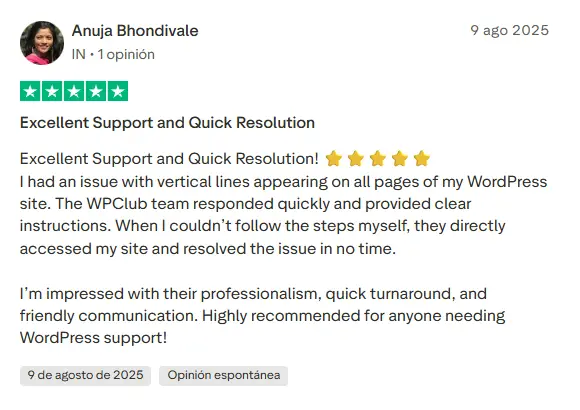
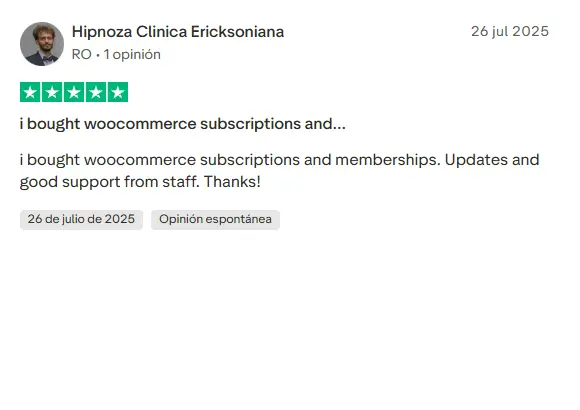
Our Reputation on Trustpilot
Many thanks to those who take the time to give us a rating on Trustpilot. Each and every one of your comments is very helpful to us. We strive to provide a rewarding experience for every member of our community, always with respect and care. We'll be here!




















WPClub Memberships
Access our entire catalog for a single payment. We offer three memberships: Monthly, Annual, and Lifetime (One-Time Payment).
- Save thousands of dollars
- Unlimited daily downloads
- No recurring payments
- Fast downloads by AWS
- Quality service and support, validated since 2018
- We work with love for our community