
WooCommerce Google Product Feeds 11.2.0


- Secure Payment
- Support from Monday to Friday
- With you since 2018
$79.00 El precio original era: $79.00.$6.99El precio actual es: $6.99.
Quick summary
WooCommerce Google Product Feeds is designed for online stores that want to appear correctly in Google Shopping without spending hours preparing manual files. It allows you to generate and maintain a structured product feed from within WooCommerce, aligned with Google Merchant Center requirements. It's especially useful for e-commerce businesses that frequently update their catalog and need prices, stock levels, and variations to be reliably reflected in Google ads.
What problem does it help solve?
When you manage a WooCommerce store and decide to advertise your products on Google Shopping, the first real obstacle arises when creating the data feed. Google requires specific fields, specific formats, and constant consistency between your website and Merchant Center. Doing this manually in spreadsheets becomes impractical as soon as you have more than a few dozen products or frequent changes in price, stock, or descriptions.
If you've ever had Google reject your articles due to formatting errors, incomplete required fields, or outdated information, you understand the direct impact: ads stopped, campaigns blocked, and sales stalled. In real-world projects, this blockage often occurs when you try to scale campaigns or work with many product categories and variations, where any discrepancy multiplies the problems.
WooCommerce Google Product Feeds focuses on that critical point: transforming your WooCommerce catalog into a data stream that Google can read, validate, and accept with less friction. The goal is to bridge the gap between "having the store up and running" and "my products displaying correctly on Google Shopping," which is where many traffic and conversion opportunities are lost.
Why this solution makes a difference
When working with WordPress and WooCommerce, you already manage all your product information in a single dashboard: titles, prices, attributes, categories, images, and inventory status. The challenge lies in translating all of that into the language and structure that Google requires. WooCommerce Google Product Feeds introduces a dedicated control layer for this transition, eliminating the need to duplicate work on external spreadsheets or parallel systems.
The daily impact is noticeable in three key areas: fewer submission errors, fewer manual tasks, and greater consistency between what users see on Google and what they find on your store. When you start noticing that reviews in Merchant Center are taking up more time than campaign optimization itself, this type of integration stops being an extra and becomes part of your store's normal workflow.
On the other hand, by centralizing feed generation within WooCommerce, you maintain a single point of truth for your catalog. Changes are managed where you already work daily and are then transferred to Google's advertising environment in an organized manner. This reduces the margin of human error, especially in teams where several people edit products, add variations, or modify stock levels.
Signs you need this product
- When you start noticing that you're spending more time fixing Google Shopping rejections than adjusting your ad campaigns.
- If you've already experienced a price change in WooCommerce taking days to be reflected correctly in Google Merchant Center because you need to update spreadsheets or external feeds.
- If your catalog exceeds a few dozen products and you feel that any massive change creates data chaos between the store and the ads.
- When your store enters a growth phase and you need to add product lines, variants, and promotions without disrupting the flow of data to Google.
When does it make sense to use it (and when doesn't)
WooCommerce Google Product Feeds make sense when your customer acquisition strategy includes Google Shopping as a stable channel, not just a one-off test. It provides real value to stores that rely on paid traffic to scale and need their catalog to be constantly synchronized with Google's requirements. It's also a good fit for projects where the catalog changes frequently, whether due to stock turnover, new collections, or price adjustments.
In this context, having a dedicated WooCommerce feed generator reduces friction, eliminates manual processes, and helps you keep your Merchant Center account more organized. It also frees up your time to focus on campaign optimization rather than correcting data errors. This is especially important when the number of products, combinations, and changes exceeds what you can easily manage in external documents.
It's not necessary if you run a very small store with few static items and no intention of continuously managing Google Shopping. If your catalog rarely changes and your campaigns are sporadic or minimal, a manual feed or a basic, one-off setup might suffice. In those cases, the complexity of a dedicated feed system doesn't offer a benefit proportional to the size of the project.
Who it fits best for
- WooCommerce store owners who consistently invest in Google Shopping ads and need to reduce product rejections and review times.
- Marketing agencies that manage multiple WordPress ecommerce sites require a more organized way to keep feeds updated without relying on manual processes for each client.
- Digital marketing managers at companies that have already validated sales through Google Ads and are now looking to scale their catalog, better segment, and keep product data organized for Merchant Center.
Practical benefits
- Real operational improvement by centralizing the preparation of the feed that Google reads in WooCommerce, avoiding parallel product management systems.
- Clearer user experience by being able to directly link fields in your catalog with the attributes that Google requires, reducing confusion and mapping errors.
- Greater control and organization over which products are sent to the feed, how they are structured, and what information is prioritized for Google Shopping ads.
- Time savings by minimizing manual editing in spreadsheets, repetitive exports, and constant corrections for incorrect data formatting.
- Reduction of errors that cause rejections in Merchant Center, resulting in more stable campaigns and fewer interruptions in the visibility of your products.
How it fits within WordPress
Within the WordPress ecosystem, WooCommerce Google Product Feeds acts as the link between your product dashboard and Google's advertising environment. It doesn't replace standard WooCommerce management, but rather leverages it to structure information in a format that Google can understand. You work where you always have: in the WordPress admin area, and from there the data flow to Merchant Center is organized.
In practice, this means the "create product – optimize listing – display in ads" cycle is much more aligned. A change to the catalog doesn't require complex external processes to reach your campaigns. For teams already using WordPress as their ecommerce hub, incorporating feed generation into that same environment reinforces the feeling of having project control in one place.
Typical use cases
- Fashion or retail stores with dozens or hundreds of items that need to update seasonal collections and quickly send those new items to Google Shopping without manually recreating feeds.
- An electronics ecommerce site that handles many variations by size, color, or capacity, where each variation must appear correctly in Google with price, availability, and specific attributes.
- Expanding businesses that already sell on WooCommerce and want to open a consistent acquisition channel through Google Ads, preventing data issues from limiting the scale of their Shopping campaigns.
Frequently Asked Questions about WooCommerce and Google Product Feeds
How does WooCommerce Google Product Feeds help with product rejections in Google Merchant Center?
WooCommerce Google Product Feeds is designed to ensure that the information sent from your store better meets Google's requirements. By structuring your catalog data into a feed tailored to the fields expected by Merchant Center, you reduce common rejection causes such as incomplete values, poorly formatted attributes, or incorrect relationships between variants. This allows you to spend less time reviewing technical error reports and more time improving the performance of your campaigns.
Is it useful if I have products with many variations in WooCommerce?
In catalogs with multiple variations by size, color, or any other attribute, the risk of inconsistencies between WooCommerce and Google increases. WooCommerce Google Product Feeds helps you transfer these variations to the feed with a consistent structure, where each relevant combination is presented with its corresponding information. This makes it easier for Google to show ads that are more aligned with what the user is searching for and what's actually available in your store at any given time.
What about frequent price or stock changes in my store?
If you frequently update prices, run promotions, or experience high inventory turnover, maintaining a manual feed becomes unreliable. WooCommerce Google Product Feeds leverages the data you manage directly in WooCommerce to keep the flow of information to Google more synchronized. Every change you make to your catalog has a defined path to be reflected in Merchant Center, preventing significant discrepancies between what you advertise and what you actually offer.
Is it only suitable for large stores or also for medium-sized projects?
It works especially well once manually managing the feed becomes a bottleneck. For a medium-sized store with dozens or hundreds of items, the time spent maintaining external files tends to grow rapidly. With WooCommerce Google Product Feeds, that part of the work is integrated into the daily WooCommerce workflow. If you have a clear intention of establishing Google Shopping as a regular channel, this approach brings order and consistency, even if you're not yet a massive e-commerce business.
How is this different from using a manual CSV export from WooCommerce?
A manual CSV export generates a static file that you must adapt to Google's required format and re-upload every time you make a significant change to your catalog. WooCommerce Google Product Feeds is designed to maintain a more structured data flow, aligned with the attributes required by Merchant Center, eliminating the need to constantly remap and format data. This way, the process ceases to be a tedious, one-off task and becomes a natural part of your store's operation.
Conclusion
WooCommerce Google Product Feeds addresses a very specific problem: transforming your WooCommerce catalog into a feed that Google accepts and keeps updated with less friction. If your sales strategy relies on Google Shopping and you're already finding that manually managing data is holding you back, integrating feed generation within WordPress gives you more control and organization. This allows you to focus your efforts on selling and optimizing campaigns, not on struggling with the structure of the data that feeds them.
Latest update:

Written by: WPClub
With over seven years of experience curating, managing, and distributing GPL products, our content is based on hands-on experience, technical review, testing, and feedback from thousands of users. We aim to democratize and simplify the WordPress world so you can choose with confidence, speed, and ease.
Your Individual Purchase Includes:
- Lifetime updates.*
- Official product, ready to use.
- Immediate access to the product.
- Clean and virus-free files.
- GNU GPL V2/V3 License
- Technical support in Spanish and English.
* In the case of memberships, the period during which you will receive updates will depend on the type of membership purchased: monthly, annual, or lifetime.
Notify Update
We update products Monday through Friday. However, if the product you see is not yet updated, you can notify us so we can prioritize updating it whenever possible.
Get your questions answered here
Here you'll find answers to frequently asked questions about our service: how it works, what it includes, and how to get the most out of it.
On how many websites can I use the products?
You can use any product from our store on any website you want.
Will I get updates?
Absolutely. If you buy an individual product, you'll get lifetime updates for that product.
On the other hand, if you purchase a membership, you will receive updates until your membership expires.
What if I have a problem?
First of all, we want you to know that you can count on us. We will assist you and provide the necessary support, so you can rest assured.
On the other hand, it is important for you to know that, given the time difference between countries, your time and ours may not be the same, so we will be delayed accordingly.
Our opening hours start at 9 AM from Monday to Friday, UTC -3. We are open until around 6 PM.
Do they provide technical support?
Yes, and regarding the time, it is usually on average within 24 to 48 business hours.
However, there are times when we have already provided an answer and solution in less than a day, depending on the case.
Are there download limits?
No. We don't believe in that format, so you can download as many times as you want. No problem. We pay for high-quality professional storage precisely to avoid problems.
Do they provide license keys?
No. Giving out the keys is not a viable option, as we have had experiences where they end up circulating everywhere and we can even lose the associated accounts.
That said, all products are original and, in cases where a license key is required to function, we will take care of pre-activating them for you.
Does my purchase include an invoice?
Yes. After payment, you will be able to access your invoice immediately in the "Purchases" section of your user account.
That is why it is important that you properly complete the information requested at the time of payment.
Is there a warranty?
Yes, of course. If there's a problem we can't resolve, or if there's an external issue that doesn't have a general solution, you'll receive support and, if necessary, a full refund. We have a 14-day refund policy from the date of purchase.
- It should be noted that there is no warranty if the product works well and it simply wasn't what you wanted.
There have been instances where someone buys a product, the product works perfectly, but they don't like it and want a refund, keeping the product. That's not right.
However, everything is evaluable and reasonable. Let's use judgment together.
What are the opening hours?
Our opening hours are:
- Monday to Friday, from 9 a.m. to 6 p.m.
- Saturday and Sunday: No service.
UTC -3 time

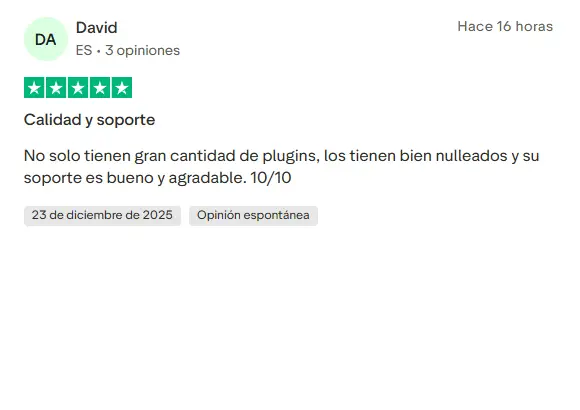
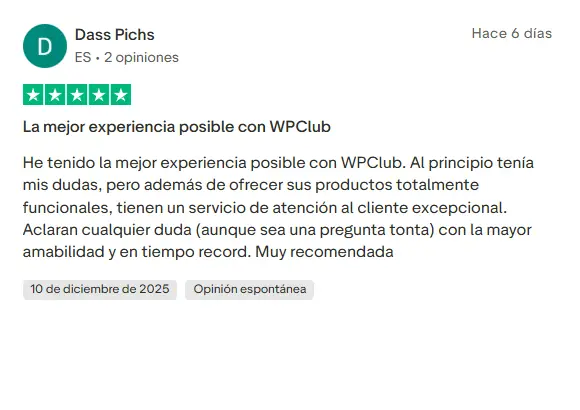
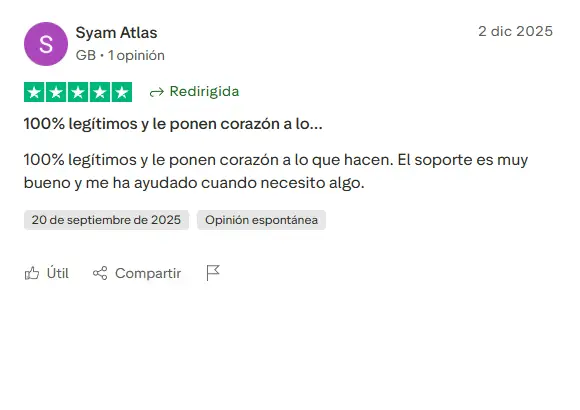
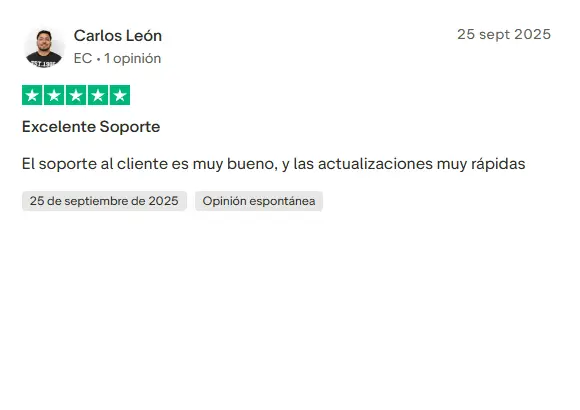
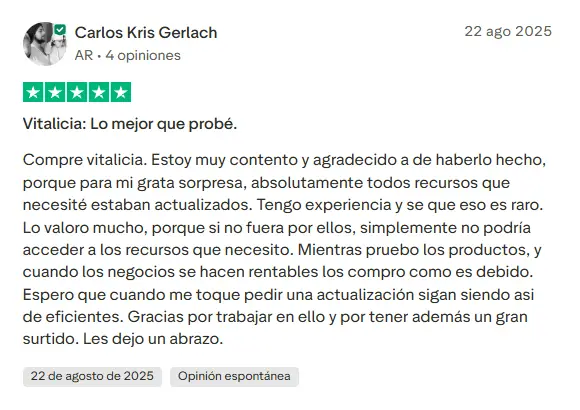
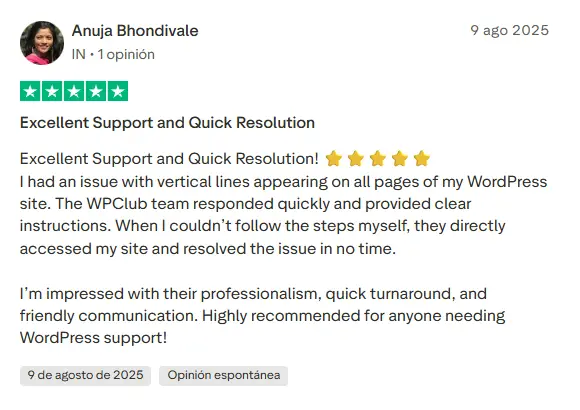
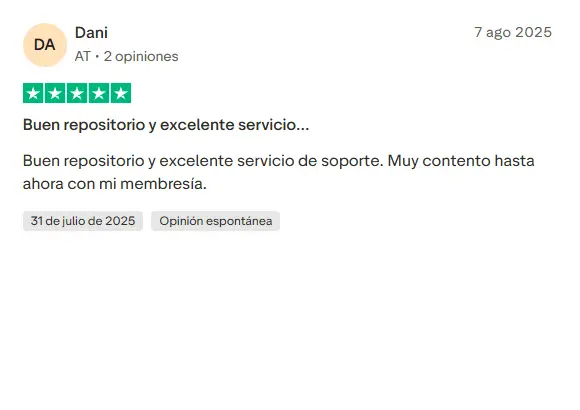
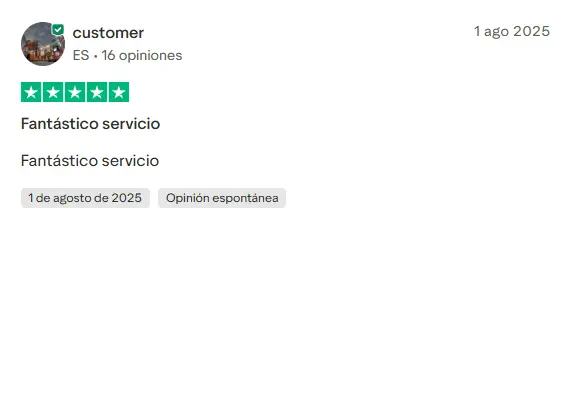
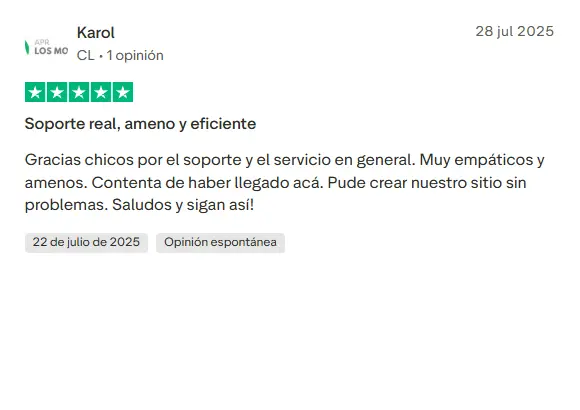
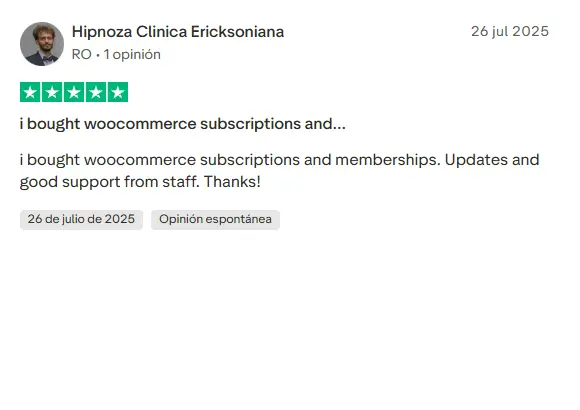
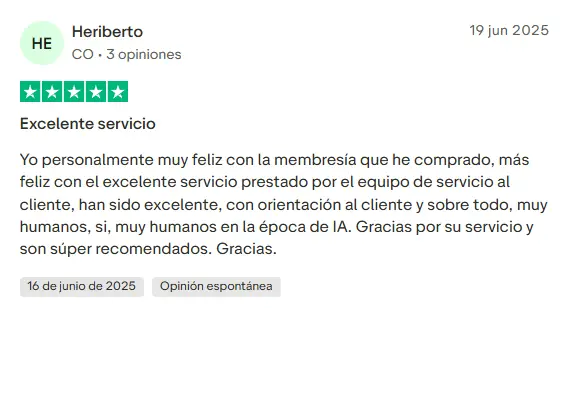
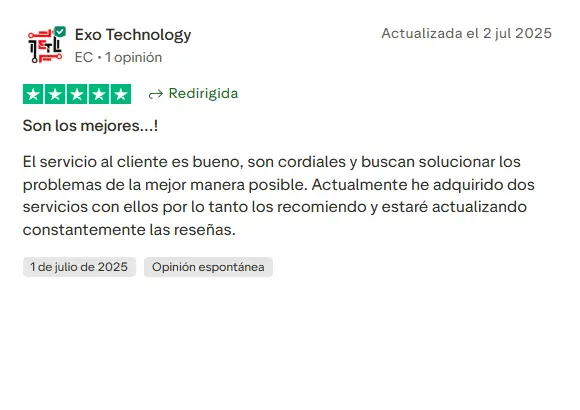
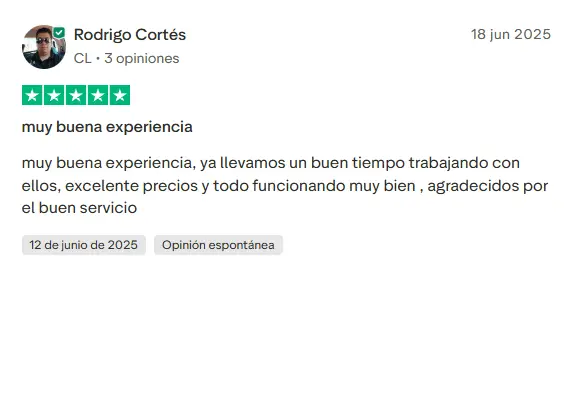
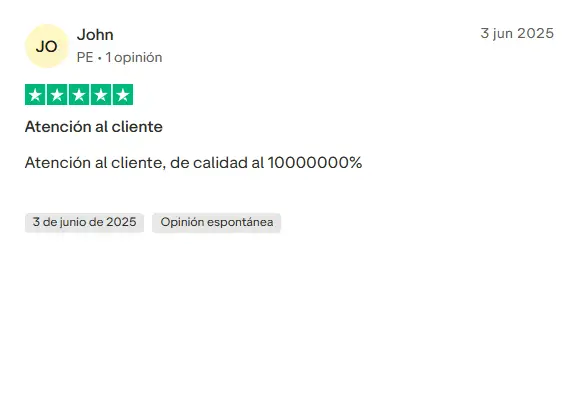
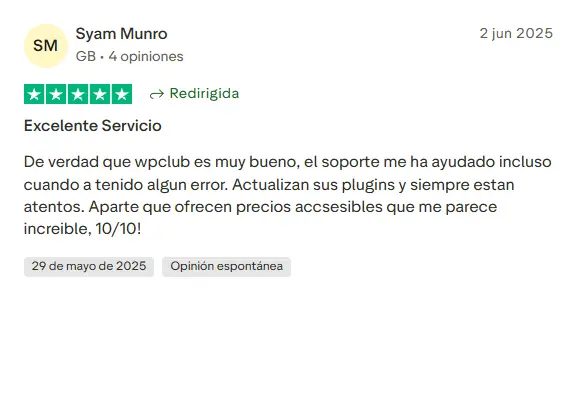
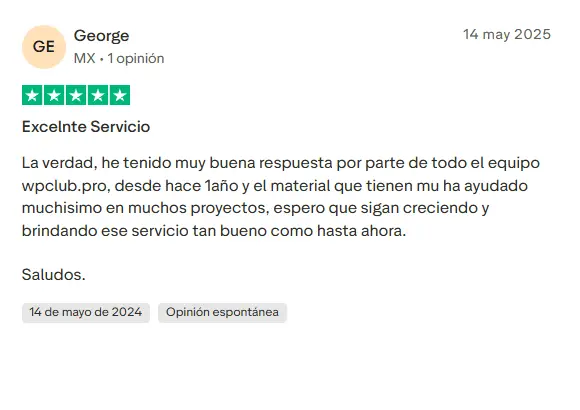
Our Reputation on Trustpilot
Many thanks to those who take the time to give us a rating on Trustpilot. Each and every one of your comments is very helpful to us. We strive to provide a rewarding experience for every member of our community, always with respect and care. We'll be here!






WPClub Memberships
Access our entire catalog for a single payment. We offer three memberships: Monthly, Annual, and Lifetime (One-Time Payment).
- Save thousands of dollars
- Unlimited daily downloads
- No recurring payments
- Fast downloads by AWS
- Quality service and support, validated since 2018
- We work with love for our community