
WP Debug Toolkit Pro 1.1.0



- Secure Payment
- Support from Monday to Friday
- With you since 2018
$499.00 El precio original era: $499.00.$8.99El precio actual es: $8.99.
Quick summary
WP Debug Toolkit is a plugin for developers and technical managers who need to understand what's really happening "under the hood" of their WordPress site when something goes wrong. It centralizes error information, warnings, and anomalous behavior so you can detect, isolate, and fix problems without wasting hours searching through files or activating scattered options. It's especially useful for growing projects, testing environments, and live online stores.
What problem does it help solve?
In real WordPress projects, errors appear at the worst possible times: blank pages, strange notifications on the front end, forms that stop submitting, shopping carts that fail to complete orders, or features that used to work but no longer do. The problem isn't just that there are errors, but that understanding what causes them often requires going into the configuration file, manually enabling options, reviewing poorly written logs, and, in many cases, modifying the server without a clear context.
If you've ever experienced a small change breaking part of your site and you're unsure whether the problem lies with the theme, a code snippet, or a specific plugin, then you're in the exact scenario for which WP Debug Toolkit was created. The challenge isn't simply "activating debug mode," but rather having an organized, clear, and practical way to work with that information without further complicating the environment.
This occurs when there are multiple developers, frequent testing of new extensions, integrations with payment gateways, or advanced automations. Without an accessible and organized debugging system, every error becomes a complete investigation from scratch, manual steps are repeated, and decisions are made blindly, impacting the site's performance and stability.
Why this solution makes a difference
WP Debug Toolkit focuses on one very specific point: transforming WordPress's "debug mode" into something usable in daily work, without relying on constant file edits or external tools poorly integrated with the dashboard. Its value lies in converting scattered technical information into actionable data, accessible from the environment where you already manage content, orders, and settings.
In e-commerce projects, for example, a PHP error message on a checkout page can impact conversions without the content team noticing until customers complain. With a well-managed debugging layer, you can turn these kinds of issues into concrete tasks: locating the source, reviewing the context, and determining whether it's due to a recent addition, a module incompatibility, or a poorly implemented function. When you start noticing that you're spending more time chasing bugs than making progress in development, having a tool like this completely changes your workflow.
Signs you need this product
- Problem already present on the site: intermittent error messages, blank loading pages, or different behaviors between test and production environments without a clear explanation.
- Friction in WordPress or WooCommerce: The panel works, but certain actions (saving products, updating orders, processing payments) generate technical alerts that are difficult to track.
- Loss of control or time: Every time something goes wrong, you have to request access to files, check server logs, and repeat manual steps to enable or disable debugging.
- Typical growth scenario: The website goes from being a simple project to a platform with more integrations, and the errors cease to be occasional and become a constant that slows down launches and changes.
When does it make sense to use it (and when doesn't)
WP Debug Toolkit is especially useful when managing sites with some technical complexity: online stores with multiple payment gateways, websites with custom extensions, projects where code snippets are frequently added, or installations maintained by a mixed team of developers and business managers. In this context, having a debugging system integrated into the dashboard allows you to react quickly, document problems, and make informed decisions before they affect end users.
It also adds value when working with development and testing environments, and you need to reproduce errors in a controlled manner. Instead of manually triggering debugging each time, you maintain a consistent way to collect, review, and share information within the WordPress environment itself.
On the other hand, this type of product isn't necessary for everyone. If you manage a very simple blog, use a standard theme without custom additions, and rarely install new extensions, the basic WordPress debugging system, activated only occasionally, might be sufficient. WP Debug Toolkit is especially useful when your workflow already includes frequent changes, third-party integrations, or custom development, and you need error detection to be part of the regular process, not an isolated, exceptional action.
Who it fits best for
- Developers and agencies: Teams that maintain multiple sites and need a consistent way to analyze errors, document incidents, and debug across different environments without relying on manual configurations on each server.
- Technical ecommerce managers: People in charge of online stores where every failure has a direct impact on sales and customer experience, and who require quick visibility into what is failing at critical moments.
- Custom-coded projects: These are facilities where custom functions, integrations with external systems, or advanced automations are added, and where any change can generate unforeseen behaviors that should be identified immediately.
Practical benefits
- Real operational improvement: You reduce the number of back-and-forths between panel, configuration files, and external logs to understand a specific failure, making the debugging process more direct and controlled.
- User experience: The team managing the site has a clear reference point for where to check technical problems, without needing to remember file paths or server parameters for each intervention.
- Control and organization: Errors cease to be isolated messages and become structured information that you can analyze critically and relate to specific actions (installations, configuration changes, recent adjustments).
- Time saving: By working with an accessible debugging layer, the time spent locating the source of the problem decreases and the time spent implementing stable improvements increases.
- Error reduction: By detecting anomalous behavior in early stages (for example, when testing new features), you minimize the risk of failures reaching end users or affecting key processes such as payments or registrations.
How it fits within WordPress
WP Debug Toolkit sits in the area where WordPress, by default, offers very basic technical information. Instead of leaving you with only constants defined in configuration files and scattered messages, its function is to bring debugging closer to your daily workflow within the dashboard. It doesn't replace your development process, but it does organize the stage where you need to understand what's happening with the code that's running.
In this context, it becomes a support tool between development and content management. The programmer has a reference point within WordPress itself to analyze problems; the project coordinator has access to precise information to prioritize tasks and decide which issues need to be resolved before launching a new campaign, sales funnel, or important feature.
Typical use cases
- Real-world use in ecommerce: After integrating a new payment gateway, some orders are not being marked as completed correctly. Using a structured debugging system, you review the messages associated with the checkout process and pinpoint the exact point that requires intervention.
- Specific case study: You implement a code snippet to customize the product page, and the site starts displaying ads in certain categories. With the WP Debug Toolkit, you can quickly identify which part of the custom code is causing the problem and under what conditions the error occurs.
- Situation where it provides direct value: Before a major campaign, you need to ensure that key pages aren't generating silent errors. Instead of relying solely on manual testing, you use debugging data to identify and resolve anomalous behavior before receiving massive traffic.
Frequently Asked Questions about WP Debug Toolkit
How does WP Debug Toolkit differ from simply enabling basic WordPress debugging?
Enabling basic WordPress debugging involves editing files and dealing with unstructured technical messages. WP Debug Toolkit focuses on making that process manageable from your regular WordPress admin environment, without constantly relying on manual modifications. It provides organization, visibility, and a user-friendly approach, so you can review errors and warnings as part of your regular site maintenance, rather than treating it as a one-off, isolated task.
Is WP Debug Toolkit useful if I manage multiple client sites?
If you maintain multiple installations, the challenge isn't just troubleshooting errors, but understanding them quickly in different contexts. WP Debug Toolkit helps you apply a consistent approach to analyzing technical issues across all your projects. When you've already experienced a client reporting a bug without details and you have to reproduce it blindly, having a coherent debugging layer across all your sites reduces diagnostic time and makes it easier to document what's actually happening.
Does it make sense to use WP Debug Toolkit in a testing or staging environment?
In testing environments, the goal is to detect bugs before they affect real users. WP Debug Toolkit fits well in this scenario because it helps gather and review technical information while experimenting with new features, extensions, or external integrations. Instead of toggling debugging options on and off with each change, you work with a consistent approach that allows you to identify patterns, isolate problematic behavior, and fine-tune the code before deploying anything to production.
Does WP Debug Toolkit help find conflicts between extensions or customizations?
Conflicts between add-ons or custom snippets often manifest as errors that are difficult to pinpoint because the symptom appears in a different part of the site than the source. WP Debug Toolkit brings clarity by collecting and displaying information related to these errors directly from the admin environment. It doesn't replace the developer's analysis work, but it provides them with more organized data to understand which component is involved, the context in which the error occurs, and what actions trigger it.
Does it make sense to use WP Debug Toolkit on a site that is already in production and has traffic?
On websites with real traffic, every change carries risk. WP Debug Toolkit helps you better manage that risk by offering a more structured way to track errors without leaving the dashboard. It's especially useful when implementing improvements to an online store, adding integrations with external services, or tweaking important features. Instead of waiting for users to report problems, you use debugging data to detect anomalous behavior and prioritize fixes before they impact the user experience or sales.
Conclusion
WP Debug Toolkit exists to fill a very specific gap: transforming WordPress debugging into an integrated and manageable part of daily work, especially when the project has reached a level of complexity that makes a basic approach insufficient. If your site depends on processes running smoothly and you need to clearly understand what happens when something goes wrong, having a structured debugging layer becomes key to maintaining stability and moving forward with greater confidence in every technical change.
Latest update:

Written by: WPClub
With over seven years of experience curating, managing, and distributing GPL products, our content is based on hands-on experience, technical review, testing, and feedback from thousands of users. We aim to democratize and simplify the WordPress world so you can choose with confidence, speed, and ease.
Your Individual Purchase Includes:
- Lifetime updates.*
- Official product, ready to use.
- Immediate access to the product.
- Clean and virus-free files.
- GNU GPL V2/V3 License
- Technical support in Spanish and English.
* In the case of memberships, the period during which you will receive updates will depend on the type of membership purchased: monthly, annual, or lifetime.
Notify Update
We update products Monday through Friday. However, if the product you see is not yet updated, you can notify us so we can prioritize updating it whenever possible.
Get your questions answered here
Here you'll find answers to frequently asked questions about our service: how it works, what it includes, and how to get the most out of it.
On how many websites can I use the products?
You can use any product from our store on any website you want.
Will I get updates?
Absolutely. If you buy an individual product, you'll get lifetime updates for that product.
On the other hand, if you purchase a membership, you will receive updates until your membership expires.
What if I have a problem?
First of all, we want you to know that you can count on us. We will assist you and provide the necessary support, so you can rest assured.
On the other hand, it is important for you to know that, given the time difference between countries, your time and ours may not be the same, so we will be delayed accordingly.
Our opening hours start at 9 AM from Monday to Friday, UTC -3. We are open until around 6 PM.
Do they provide technical support?
Yes, and regarding the time, it is usually on average within 24 to 48 business hours.
However, there are times when we have already provided an answer and solution in less than a day, depending on the case.
Are there download limits?
No. We don't believe in that format, so you can download as many times as you want. No problem. We pay for high-quality professional storage precisely to avoid problems.
Do they provide license keys?
No. Giving out the keys is not a viable option, as we have had experiences where they end up circulating everywhere and we can even lose the associated accounts.
That said, all products are original and, in cases where a license key is required to function, we will take care of pre-activating them for you.
Does my purchase include an invoice?
Yes. After payment, you will be able to access your invoice immediately in the "Purchases" section of your user account.
That is why it is important that you properly complete the information requested at the time of payment.
Is there a warranty?
Yes, of course. If there's a problem we can't resolve, or if there's an external issue that doesn't have a general solution, you'll receive support and, if necessary, a full refund. We have a 14-day refund policy from the date of purchase.
- It should be noted that there is no warranty if the product works well and it simply wasn't what you wanted.
There have been instances where someone buys a product, the product works perfectly, but they don't like it and want a refund, keeping the product. That's not right.
However, everything is evaluable and reasonable. Let's use judgment together.
What are the opening hours?
Our opening hours are:
- Monday to Friday, from 9 a.m. to 6 p.m.
- Saturday and Sunday: No service.
UTC -3 time

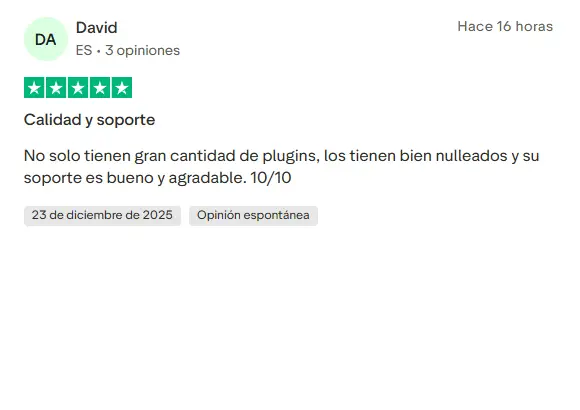
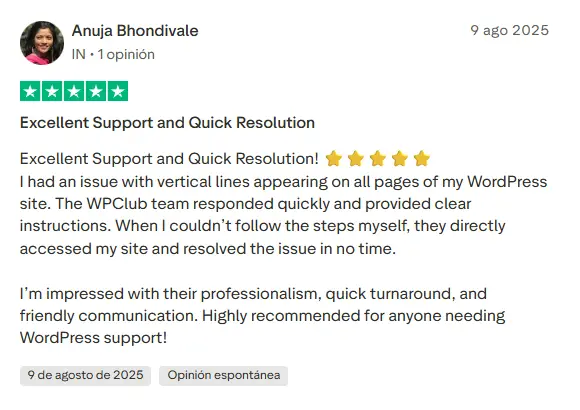
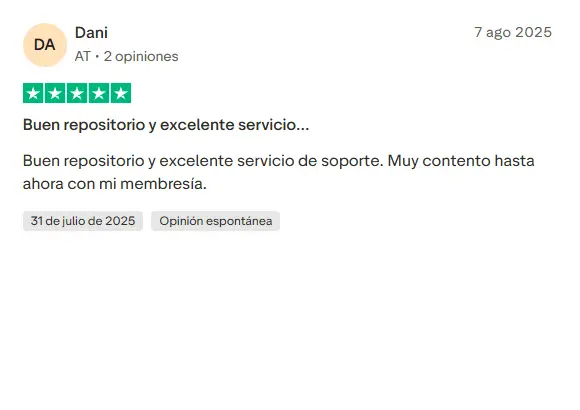
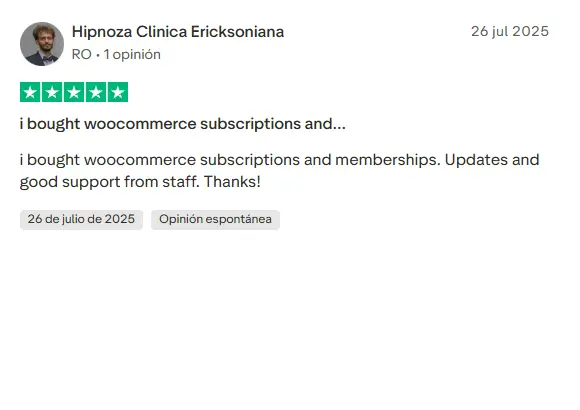
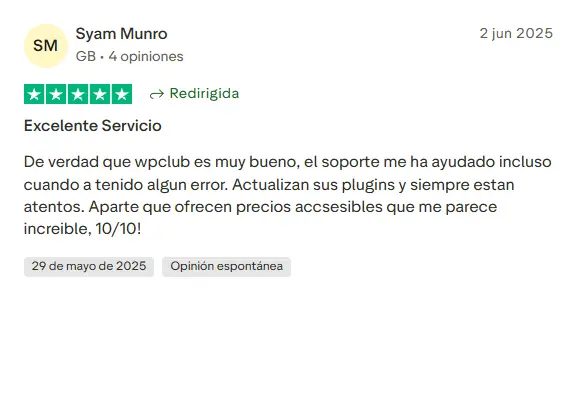
Our Reputation on Trustpilot
Many thanks to those who take the time to give us a rating on Trustpilot. Each and every one of your comments is very helpful to us. We strive to provide a rewarding experience for every member of our community, always with respect and care. We'll be here!

















WPClub Memberships
Access our entire catalog for a single payment. We offer three memberships: Monthly, Annual, and Lifetime (One-Time Payment).
- Save thousands of dollars
- Unlimited daily downloads
- No recurring payments
- Fast downloads by AWS
- Quality service and support, validated since 2018
- We work with love for our community